
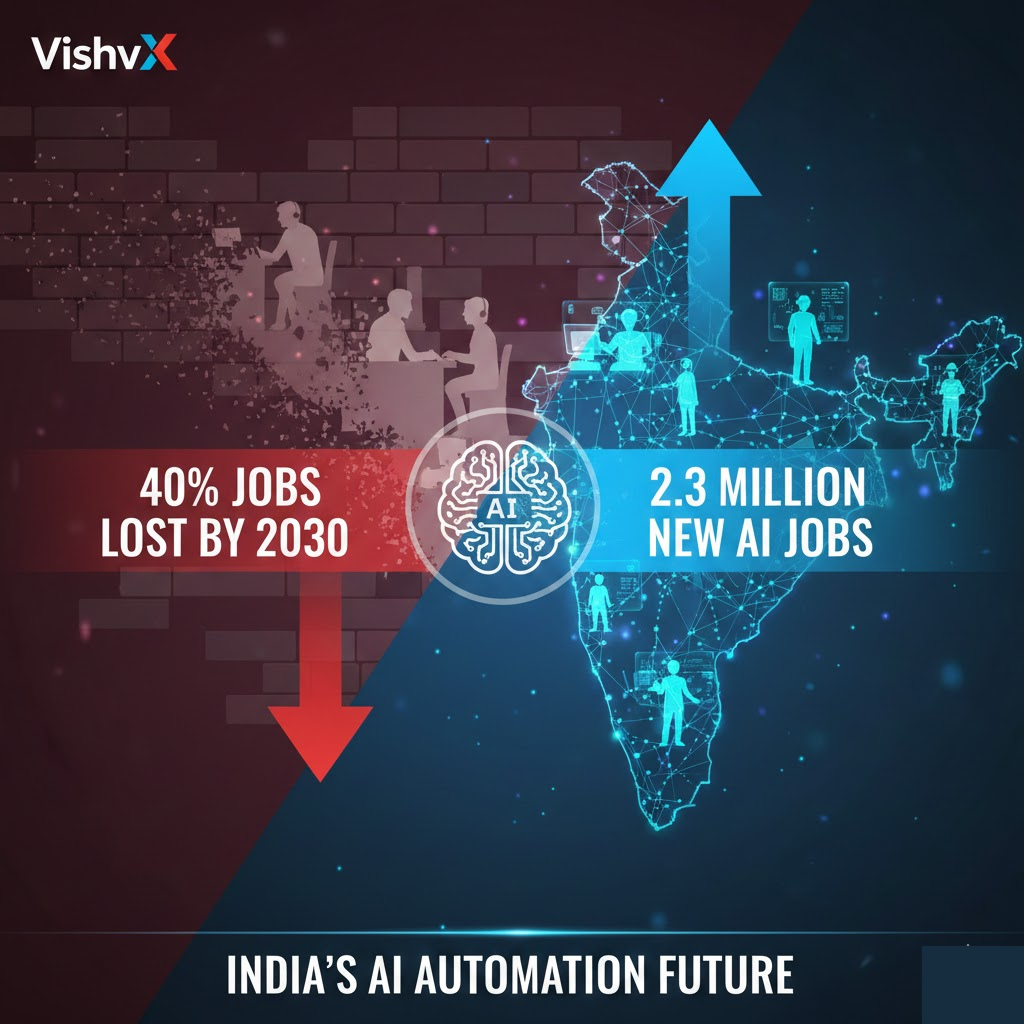
This is not a article designed to scare you, but frankly, if you get a little scared, it might actually be good for you.
We are staring at a reality where, by 2030—which is only five years away—AI automation could eliminate anywhere between 20 to 50 million jobs in India. The warning signs are already here. Indian IT companies, which have long been the foundation of our workforce, reduced their hiring by 67% in the first half of 2025 compared to 2024.
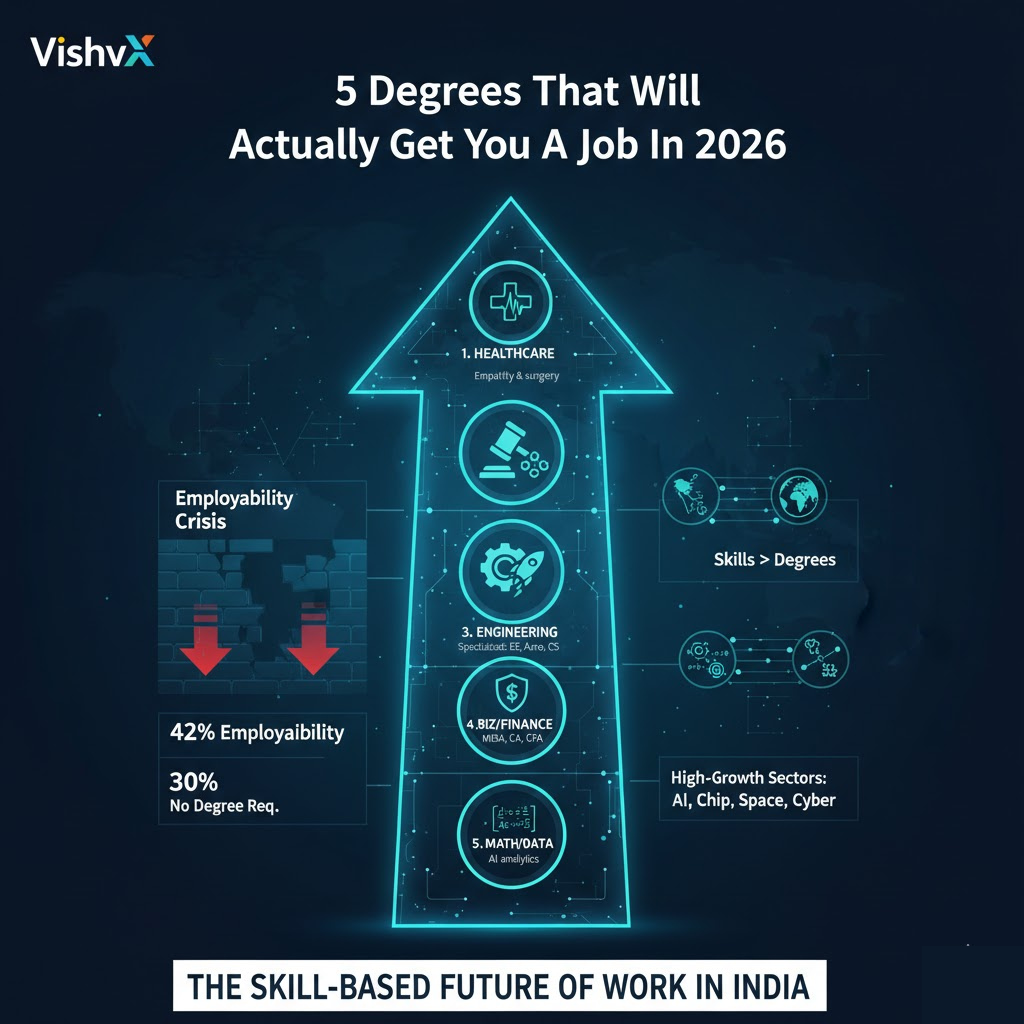
But the most shocking statistic is this: only 42.6% of India’s graduates today are employable. If you pursue a Bachelor’s degree, there is less than a 50% probability that you will actually get a job.
Read the article carefully…….
The Disconnect: Education vs. Reality
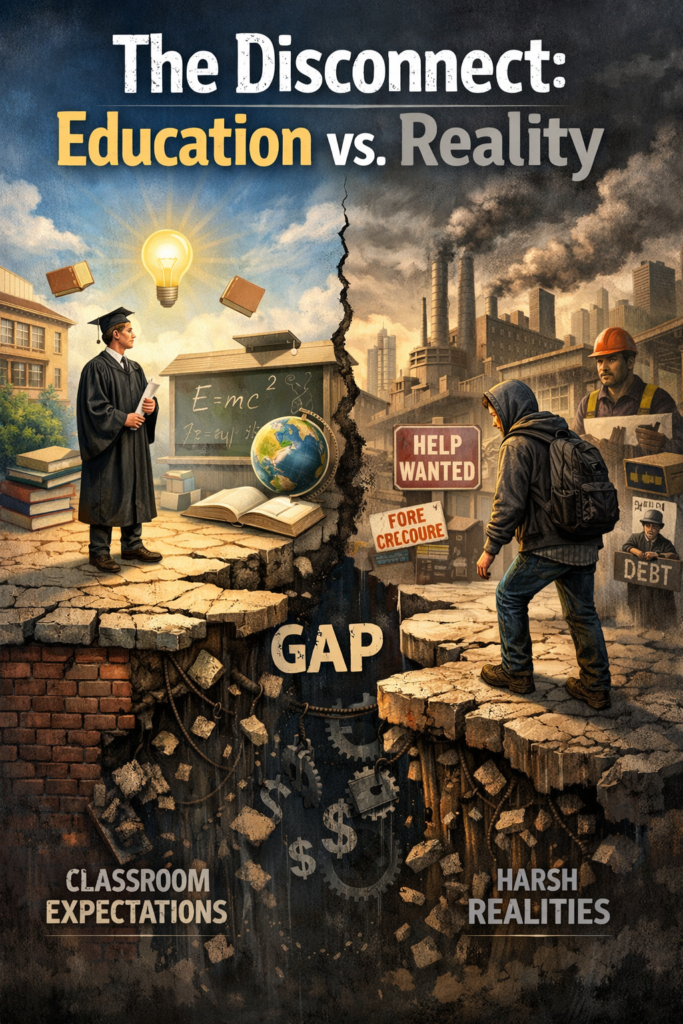
Even for Computer Science graduates, unemployment currently sits between 6.5% to 7.5%. Graduates from premier institutes like IITs and NITs are struggling to find placements, and when they do, the pay is often far below their skill level. The situation in Tier-3 colleges is even worse, with nearly 50% of students failing to get placed within three months of graduating.
I recently spoke to an administrator from a large Tier-3 college. In the past, IT companies would recruit about 15,000 students annually from there. In 2025, that number dropped to fewer than 500.
We cannot blame AI entirely for this; there are multiple culprits. The biggest issue is that our college curriculum is completely disconnected from industry needs. Students are being trained on things that AI automated two years ago. By the time you graduate, what you learned in the classroom is already obsolete by 5 to 10 years.
There is no focus on on-the-job training, internships are not prioritized, and freelancing is not encouraged. Instead, the system mandates 75% attendance for classes where very little practical learning happens. The focus remains on exams and ranks, but no one knows what those ranks actually achieve. You spend four years learning concepts and facts, but you lack the knowledge of how to execute them in the real world or use current best practices.
When you finally join a company, the learning curve is incredibly steep. You feel lost. Frankly, one year of free internship would likely teach you more than a four-year degree.
The AI Competitor: Faster, Cheaper, Better
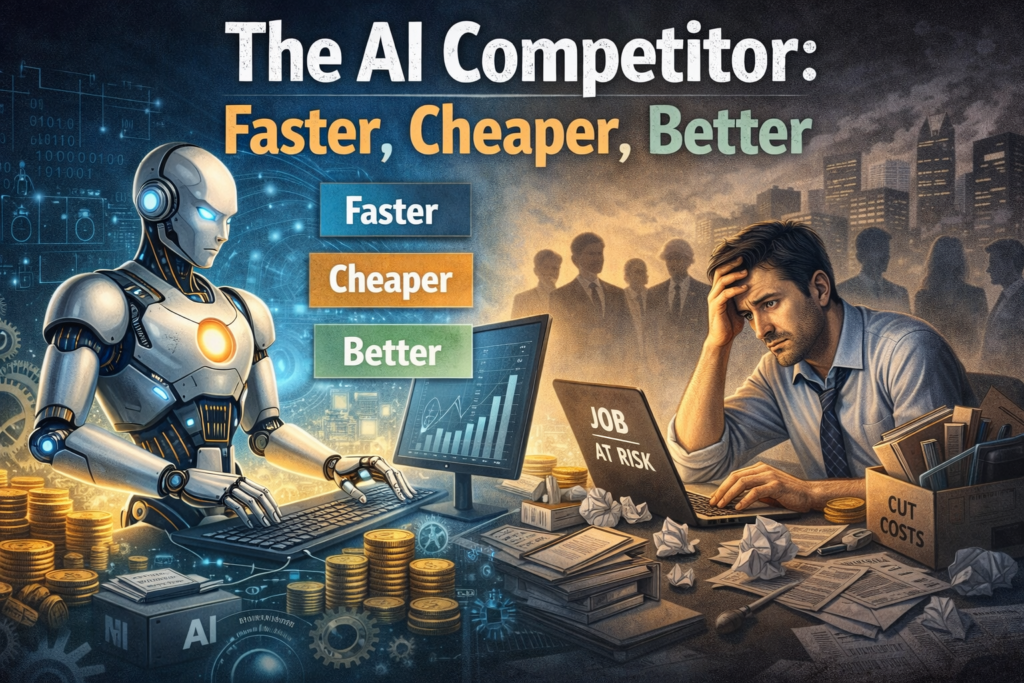
While graduates are struggling with this skill gap, AI is taking over. Large Language Models (LLMs) can now execute tasks that previously required teams of people. Where three humans were needed, now half a human and a $20 monthly subscription can do the same job.
Consider the AI “employee.” They have no emotions, they don’t take holidays, they don’t have personal problems, and they don’t demand work-life balance. They cost between $20 to $200 a month, require no upkeep, and no investment in training. From content writing to customer support, every industry is being impacted.
The entry-level workforce is the most vulnerable. There is a misconception that using AI makes your job safe—like a modern “government job”—but that isn’t true. Companies, including Microsoft, have fired staff within their AI departments because they realized machines could do the work faster and cheaper.
Beyond ChatGPT: The Real Capability of AI
Many people stop their AI knowledge at ChatGPT, but the disruption goes much deeper.
• Video Editing: AI tools can create backgrounds, generate B-roll, convert long-form videos to shorts, and even create AI avatars that replicate your voice and facial movements perfectly.
• Sales: AI can analyze leads instantly, identifying gaps, past interactions, budgets, and product fit, creating pitch decks in seconds—work that used to take weeks.
• Healthcare: There are specific AI tools designed solely for medical diagnostics and management.
The problem is that people are not aware of these tools, or they are simply too lazy to learn them. Students are using ChatGPT to cheat on assignments rather than to learn, making themselves “dumber” while the systems get “smarter.” The time saved by AI is being wasted on Instagram Reels and Netflix instead of upskilling.
The Opportunity: 4 Lakh Open Jobs
However, there are two sides to this coin.
“You can choose to be an ostrich with your head in the sand, or you can leverage the fact that technology democratizes access. “
With a phone and the internet, you have access to the same knowledge as anyone else in the world.
Currently, there are 400,000 open job positions in India specifically for AI roles—not just roles requiring AI skills, but AI-specific jobs. By 2027, this is expected to rise to 2.3 million jobs. This sector is growing at 25% year-on-year.
The Financials are Attractive:
• Freshers: ₹5 to ₹12 Lakhs per annum (compared to ₹3-4 Lakhs for normal graduates).
• Mid-level Professionals: ₹12 to ₹25 Lakhs per annum.
• Senior Roles: ₹30 to ₹50 Lakhs and upwards (with no upper limit in global tech giants).
This growth isn’t limited to Bangalore, Mumbai, or Hyderabad. Tier-2 cities like Jaipur, Chandigarh, and Coimbatore are seeing AI job growth of 27-30%. Many of these roles offer Work From Home options, providing cost savings and work-life balance.
The Strategy: How to Transition
If you want to build a career in this field, here is my advice:
1. Don’t Quit Your Job Yet: If you need financial stability, stay employed. Do not jump into a random course without income. Use your nights, weekends, and holidays to learn.
2. Start Learning: There are excellent free courses on YouTube, and affordable ones on Coursera and Udemy. Start there to see if you actually enjoy the field.
3. Get Hands-On Experience: Once you finish a course, do internships or freelance work. You need to “get your hands dirty” and build a portfolio. This transition should happen slowly over 2 to 6 months.
4. For Students: Treat your college curriculum as your “day job” that you must do, but devote your free time to studying AI. Do not waste your youth on video games; if you fall behind now, catching up will be nearly impossible.
What is Safe?
People often ask which roles will remain untouched.
• Human Connection: Roles requiring high empathy, such as mental health professionals and doctors (specifically the patient-connection aspect), are safer. Machines cannot replicate that human bond.
• Physical Labor: Plumbers, electricians, and event managers who require physical presence will remain relevant.
Interestingly, the demand for traditional government jobs may rise even further as people seek perceived security from AI firing.
Conclusion
This shift is permanent. It is long-term. If you do not participate, you will be left behind. However, India is at an advantage. Our dominant age demographic is 18 to 30—a group that adopts technology quickly. If we embrace AI and decide to do something significant with it, we can cater to the entire world just as we did with the IT boom.
The choice is yours: Will you let AI replace you, or will you use it to upgrade yourself?
Also Read:






3 Comments on “Why AI Will Take 40% of Jobs by 2030”