
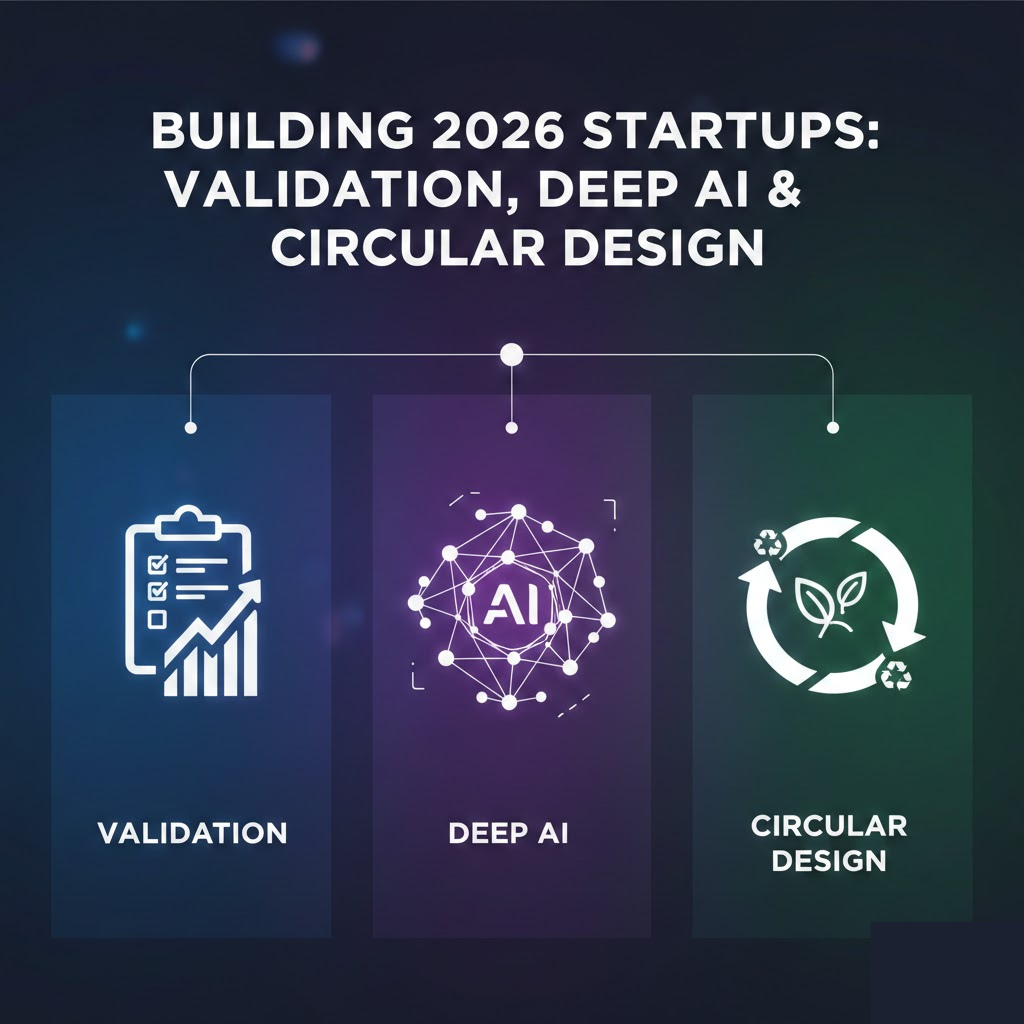
Forget the Silicon Valley ‘unicorn’ dream. In 2026, the real wealth isn’t being built in flashy consumer apps—it’s being built in the basement of HVAC warehouses, government filing rooms, and supply chain docks. While most founders are still building ‘wrappers‘ around AI chatbots, the winners are embedding agentic workflows into the world’s most boring problems. If you want to build a resilient company this year, you have to stop chasing the ‘new’ and start fixing the ‘broken.’ Here is how to master the demand-first, circular-design playbook for 2026.
1. How to Build Vertical AI Agents for “Boring” Industries in 2026
In 2025, we talked about “using AI.” In 2026, successful businesses are “AI-first.” The shift is profound: we have moved from general-purpose chatbots to Vertical AI—tools laser-focused on specific industries that solve expensive, boring problems.
• From Tools to Teammates: AI is no longer just a “copilot”; it is running entire business functions. “Agentic AI” systems can now plan and execute workflows independently. For example, AI agents are taking over routine knowledge work, such as drafting documents and managing CRM data, allowing human teams to focus purely on decision-making.
• High-Value Niche Opportunities: The biggest opportunities for startups lie in unglamorous, high-friction sectors:
◦ Government Contracting: Instead of consultants charging $300/hour, AI agents can now analyze government RFPs and generate compliant responses for pennies on the dollar.
◦ Immigration Law: New platforms are using AI to cross-reference visa applications against thousands of pages of regulations, flagging inconsistencies that human paralegals might miss.
◦ Specialized Data Extraction: Tools like Thunderbit have democratized data collection, allowing non-technical teams to turn websites into structured spreadsheets without coding, streamlining sales and operations.
Strategic Insight: Don’t build a “wrapper” around ChatGPT. Build a “Vertical AI” solution that deeply understands the regulatory, linguistic, and workflow nuances of a specific industry like legal, healthcare, or logistics.
2. Profiting from the Circular Economy: Sustainable Product Lifecycle Strategies
Sustainability is no longer a “nice-to-have” marketing slide; it is a regulatory gatekeeper and a massive revenue opportunity. The circular economy market is valued at approximately $517 billion and is growing rapidly as industries move from “take-make-waste” to “reduce-reuse-recycle” models.
• Digital Product Passports (DPPs): One of the most critical innovations of 2026 is the DPP. These blockchain-enabled digital records track a product’s entire lifecycle, detailing materials, origins, and recyclability. This transparency is becoming a requirement for market access in regions like the EU.
• The Internet of Waste: Smart cities are deploying AI and IoT sensors in waste bins to optimize collection routes, reducing costs by 20%. Startups like Akanthas are using computer vision to monitor waste quality in real-time, gamifying recycling for businesses.
• Bio-Innovation: We are seeing a boom in bio-based materials that replace plastics. Startups are engineering algae and agricultural waste into high-performance packaging and textiles, moving beyond simple recycling to genuine regeneration.
Strategic Insight: Investors in 2026 are looking for “Climate Tech” that delivers measurable ROI. Focus on Refurbishing & Remanufacturing—restoring used goods to like-new condition—which saves 85% of the energy compared to making new products.
3. The Future of Precision Nutrition: AI-Driven Health and Microbiome Startups
Healthcare in 2026 is predictive, participatory, and hyper-personalized. The “one-size-fits-all” diet is dead, replaced by precision nutrition powered by AI and microbiome science.
• Nutrition as Infrastructure: Consumers now expect nutrition advice based on their biology, not generic pyramids. Services are emerging that integrate real-time data from wearables (glucose levels, heart rate) to adjust meal plans dynamically.
• The Microbiome Frontier: Gut health has moved from health food stores to clinical settings. Interventions now target specific gut bacteria to reduce inflammation and chronic disease risk.
• Elder Care Technology: With 10,000 Baby Boomers turning 65 daily, there is a desperate need for platforms that coordinate care. The “fragmented” market of caregivers, medication tracking, and fall detection is being unified into single “family coordination” platforms.
• AI Mental Health: While consumer apps faced challenges, B2B mental health platforms that integrate with employer wellness programs are thriving. These tools use clinically validated AI to offer CBT (Cognitive Behavioral Therapy) with licensed oversight, bridging the massive gap in therapist availability.
4. Space Infrastructure Opportunities: Software and Data Analytics for Orbit
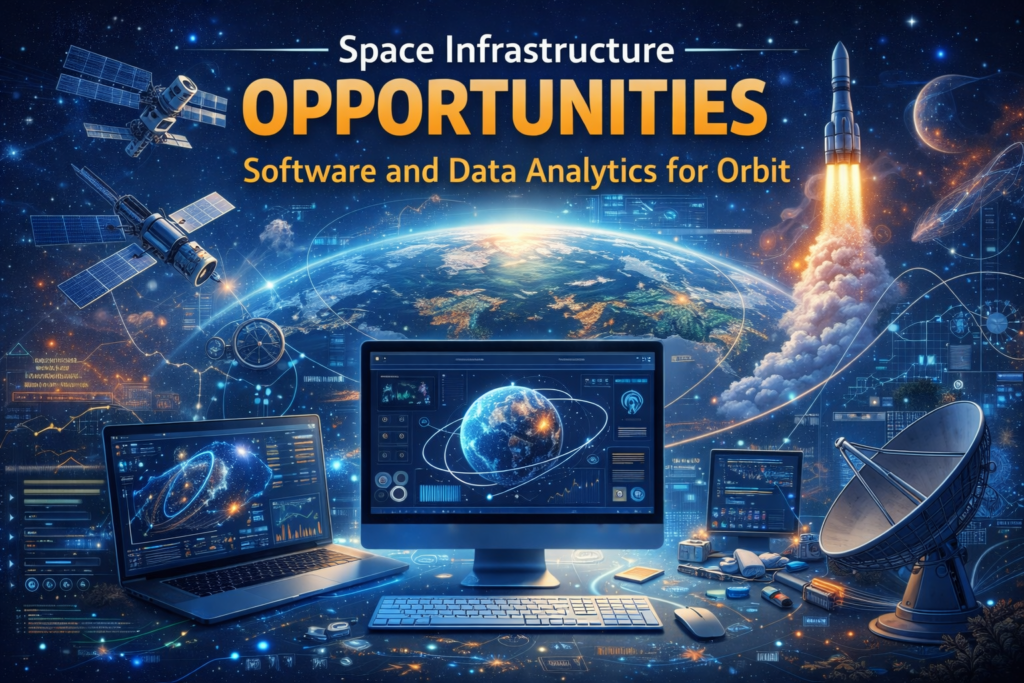
The space industry has matured from a government monopoly to a vibrant ecosystem of private innovation. It is no longer just about launching rockets; it is about managing the infrastructure of orbit.
• Orbital Management: With thousands of satellites now in orbit, managing them manually is impossible. AI is essential for “constellation management,” autonomously adjusting orbits to prevent collisions and optimize coverage.
• Earth Observation (EO): Satellites are the new “eyes” of the economy. Startups are using AI to analyze satellite imagery for precision agriculture (detecting crop stress before it’s visible to the human eye) and infrastructure monitoring (detecting millimeter-level sinking in bridges or dams).
• Space Debris Tracking: As orbit gets crowded, “Space Situational Awareness” has become a critical business. AI systems that can track debris and automate collision avoidance maneuvers are essential for protecting billion-dollar assets.
Strategic Insight: You don’t need to build a rocket to be a space entrepreneur. The highest margins often lie in software and data analytics—building the tools that help hardware operators make sense of the data beaming down from space.
5. Integrating Embedded Finance into the Creator Economy Ecosystem
The way we work and transact has fundamentally changed. The “hybrid” model has stabilized, with knowledge workers expecting 2-3 days remote per week. This has created demand for “async-first” collaboration tools that reduce meeting fatigue.
• Embedded Finance: Banking is disappearing into the background. By 2026, most financial transactions—loans, insurance, payments—happen inside non-bank apps (like booking a ride or buying software). This “Embedded Finance” market is projected to reach nearly $600 billion by 2030.
• The Creator Economy Class: Creators are becoming businesses. Platforms that offer “all-in-one” operating systems for creators—handling subscriptions, courses, and email marketing—are replacing fragmented toolsets.
• Gen Z Neobanking: A massive wealth transfer is underway. Gen Z, who trust crypto platforms five times more than traditional banks, are flocking to “Neobanks” that blend traditional checking with crypto investing, social features, and gamified savings.
6. Why Human-Centric Trust and Social Commerce are Critical for 2026 Ventures
Despite the dominance of AI, the most successful businesses in 2026 recognize the premium on human connection and trusted experiences.
• Short-Form Video Commerce: The shopping journey now begins on video. Consumers prefer watching a creator demonstrate a product over reading a static ad. “Social commerce” is exploding, with platforms like TikTok Shop setting the standard for how products are discovered and bought.
• Verification and Trust: In an age of AI-generated content and “greenwashing,” trust is a currency. Marketplaces that offer verified sustainable products (with blockchain-backed supply chain proof) or verified local communities (an alternative to spammy neighborhood apps) are finding eager audiences.
Summary: Where to Build in 2026
If you are launching a venture this year, the winning formula involves timing, leverage, and solving genuine pain points.
1. Validate First: Do not build in a vacuum. Interview customers and validate demand before writing code.
2. Target “Boring” Problems: The most profitable ideas often involve fixing broken, unsexy workflows in industries like HVAC, government compliance, or supply chain logistics.
3. Embed AI Deeply: Don’t just add a chatbot. Use AI to fundamentally rethink how the work is done—reducing costs by 90% or speeding up processes by 10x.
4. Think Circular: Ensure your product lifecycle is sustainable by design. It is what investors, regulators, and consumers now demand.
The opportunities in 2026 are vast, but they favor the focused. Whether in deep space data, gut health, or automated legal compliance, the winners will be those who use advanced technology to deliver simple, human-centric solutions.
Also Read:








3 Comments on “Building 2026 Startups: Validation, Deep AI & Circular Design”