
You eat reasonably well. You exercise when you can. Yet the number on the scale barely budges, and you feel perpetually drained by mid-afternoon. If this sounds familiar, you’ve probably blamed your metabolism—and you might be right. Metabolism is the complex biochemical engine that converts food into energy, and when it runs slower than it should, the effects ripple through every part of your life: weight gain, fatigue, brain fog, and even constant coldness .
But here’s the truth that most “metabolism myths” won’t tell you: while your baseline metabolic rate is influenced by genetics, age, and hormones, it is absolutely not fixed . Research from leading institutions like Harvard Health and Cleveland Clinic confirms that strategic lifestyle changes can nudge your metabolism higher, sometimes significantly . This isn’t about crash diets or magic pills—it’s about understanding how your body’s engine works and giving it the right fuel and maintenance to run efficiently. Here are seven science-backed ways to boost your metabolism naturally.
What Is Metabolism and Why Does It Slow Down?


Before fixing a slow metabolism, you need to understand what it actually is. Metabolism isn’t a single organ or switch—it’s the sum of all chemical processes that keep you alive and functioning . Your body is constantly breaking down nutrients from food and converting them into energy for breathing, circulating blood, repairing cells, and everything in between .
Your total daily energy expenditure (TDEE) consists of three main components:
- Basal Metabolic Rate (BMR): The calories your body needs to perform basic life-sustaining functions at complete rest—breathing, circulation, cell production. This accounts for a whopping 60-75% of the total calories you burn each day .
- Thermic Effect of Food (TEF): The energy required to digest, absorb, and process the nutrients from your food. This makes up about 10% of your TDEE .
- Activity Energy Expenditure (AEE): The calories burned through both structured exercise and all the little movements throughout your day (walking, fidgeting, taking stairs) .
So why does metabolism slow down? Several factors contribute:
- Age: Metabolism naturally slows with age, especially after 30, due to loss of muscle mass and hormonal changes . Research shows metabolism declines about 1-2% per decade after age 20 .
- Muscle Mass: Muscle burns more calories at rest than fat tissue does. Less muscle means a lower BMR .
- Hormonal Imbalances: Conditions like hypothyroidism, insulin resistance, or PCOS can significantly slow metabolism .
- Chronic Stress: Elevated cortisol levels promote fat storage and reduce metabolic efficiency .
- Crash Dieting: Severely restricting calories signals your body to conserve energy, slowing BMR as a defense mechanism .
- Sedentary Lifestyle: Lack of physical activity decreases muscle mass and metabolic rate .
- Genetics: Some individuals inherit a slower metabolic rate.
Signs You Might Have a Slow Metabolism
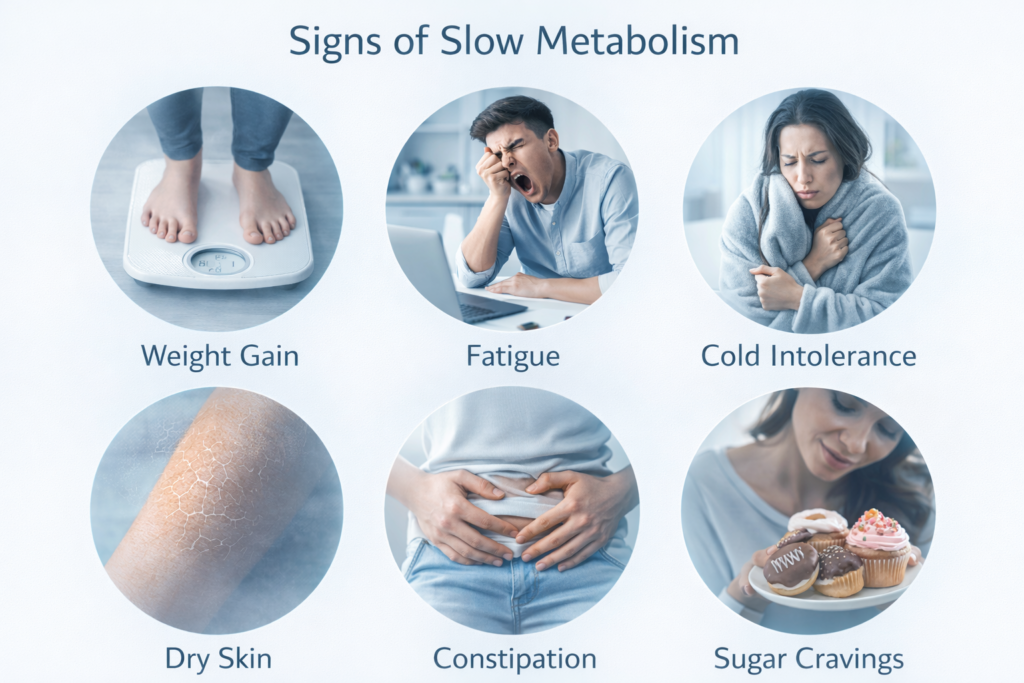
How do you know if your metabolism is genuinely slow versus normal variations? Watch for these common symptoms :
- Unexplained Weight Gain: Difficulty losing weight despite regular exercise and healthy eating, or gaining weight without changing habits .
- Chronic Fatigue: Persistent tiredness or low energy, even after adequate sleep .
- Cold Intolerance: Feeling unusually cold, especially in hands and feet, because your body isn’t generating enough heat through metabolic processes .
- Dry Skin and Hair: Decreased circulation and slower cell turnover can lead to dry, brittle hair and skin .
- Constipation: Slowed digestion means food takes longer to travel through your system .
- Hair Loss: Significant thinning can be associated with hormonal imbalances affecting hair growth cycles .
- Sugar and Carb Cravings: Your body seeks quick energy when metabolic conversion is inefficient .
If these symptoms persist, consider consulting a healthcare provider to check for underlying conditions like hypothyroidism, nutrient deficiencies, or hormonal imbalances .
1. Build Muscle Through Strength Training
If you only make one change to boost your metabolism, make it this: build more muscle. Muscle tissue is metabolically active—meaning at rest, a pound of muscle burns significantly more calories than a pound of fat .
The Science: Cleveland Clinic endocrinologist Dr. Marcio Griebeler explains: “Muscle burns more calories sitting around than fat tissue does. If you build muscle, it’ll burn extra calories even while you’re lounging on the couch” . This effect is known as the “afterburn effect” or excess post-exercise oxygen consumption (EPOC)—your body continues burning calories at an elevated rate for hours after strength training as it repairs muscle and restores itself .
Research shows that six weeks of moderate resistance training increased resting metabolic rate in sedentary women, with regular strength trainers burning 265 more calories daily at rest .
How to Apply: Aim for two to three strength training sessions per week targeting major muscle groups . Options include:
- Body-weight exercises (push-ups, lunges, squats)
- Weightlifting with free weights or machines
- Resistance band workouts
2. Eat Enough Protein at Every Meal
Protein is metabolism’s best friend—and for several reasons.
The Science: Protein has the highest thermic effect of food (TEF) of any macronutrient. This means your body expends more energy digesting, absorbing, and processing protein compared to carbohydrates or fats. Protein’s thermic effect is 20-30% , compared to 5-10% for carbs and 0-3% for fats . One study found this can lead to nearly 300 more calories burned daily .
Additionally, protein is essential for building and preserving the calorie-hungry muscle mass discussed above . It also increases satiety, helping you feel fuller longer and reducing overall calorie intake .
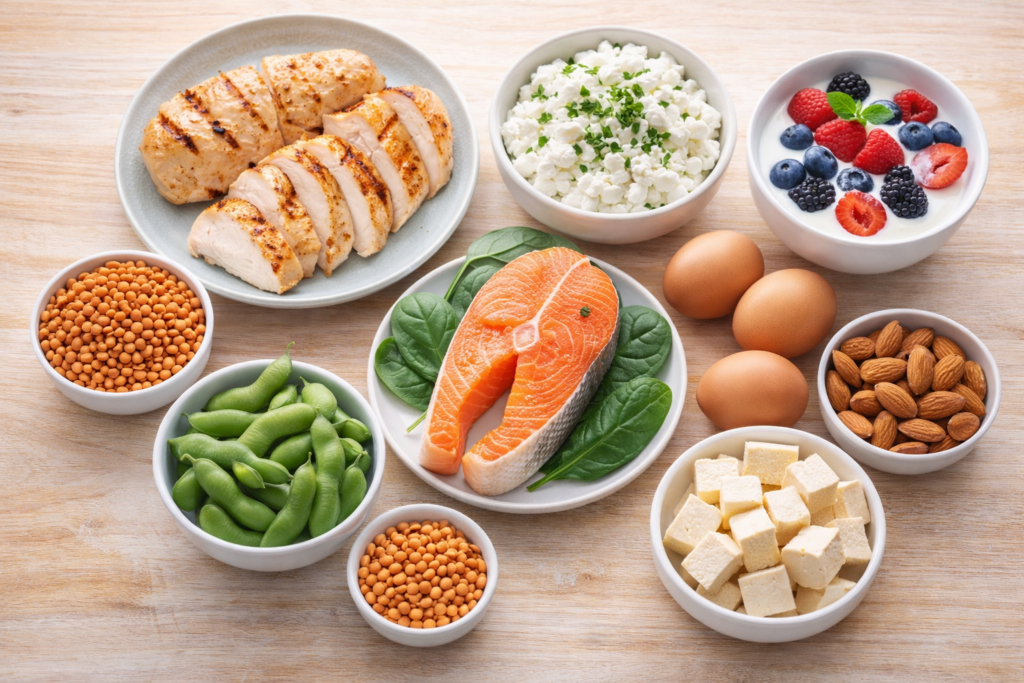
How to Apply: Include a source of lean protein with every meal :
- Eggs, fish, lean chicken or turkey
- Greek yogurt, cottage cheese
- Beans, lentils, tofu, edamame
- Nuts, chia seeds
Harvard Health notes that eating larger meals earlier in the day may also boost metabolism, as the thermic effect of food is higher in the morning and lower in the evening.
Also Read:
Sleep Hygiene : Why You’re Tired Even After 8 Hours Sleep and How to Fix It
3. Drink More Water (Especially Cold Water)
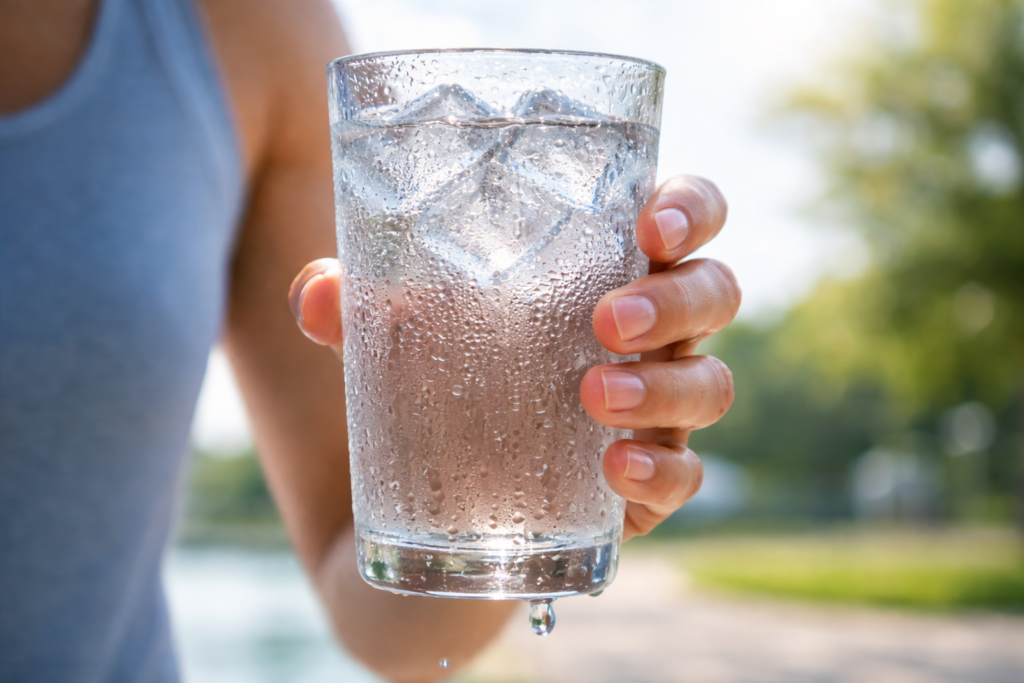
Hydration is fundamental to every metabolic process in your body. When you’re dehydrated, everything slows down—including your metabolism .
The Science: Drinking water increases metabolic rate because the mechanism of hydration expands cell volume . Studies show that drinking 0.5 liters of water increases metabolic rate by 10-30% for about an hour . The effect is even greater with cold water, as your body expends energy to heat it to body temperature .
Cleveland Clinic emphasizes: “Dehydration can slow your metabolism, so drinking enough water throughout the day is essential” .
How to Apply: Aim for at least 8 cups (2 liters) of water daily . Replace sugary drinks with water or herbal tea . Keep a water bottle at your desk and sip consistently throughout the day rather than chugging large amounts occasionally.
4. Try High-Intensity Interval Training (HIIT)
While all exercise burns calories, high-intensity interval training (HIIT) offers unique metabolic benefits that extend long after your workout ends.
The Science: HIIT involves short bursts of intense exercise followed by brief recovery periods. This pattern creates a powerful “afterburn effect” (EPOC), where your body continues burning calories at an elevated rate for hours as it works to restore itself .
One study found that energy expenditure up to an hour following HIIT was higher compared to steady-state aerobic exercise . HIIT also effectively builds muscle and improves cardiovascular fitness simultaneously .
How to Apply: Start slowly and progress steadily. A simple HIIT session might involve:
- 30 seconds of sprinting or high-intensity effort
- 60-90 seconds of walking or low-intensity recovery
- Repeat for 15-20 minutes
Cleveland Clinic recommends combining aerobic exercise and strength training for a total of 150 minutes each week.
5. Drink Green Tea or Coffee
Your morning cup might do more than wake you up—it could give your metabolism a gentle boost.
The Science: Both green tea and coffee contain compounds that enhance metabolic rate. Green tea provides caffeine and catechins (notably EGCG), which together can increase fat burning and metabolic rate, particularly during exercise . Coffee’s caffeine stimulates your nervous system and signals fat cells to break down body fat .
Harvard Health notes that drinking about three cups of green tea daily can help you burn around 100 extra calories . A study assessing caffeine’s effect found that those drinking four cups of coffee daily for six months saw an approximately 4% drop in body fat without other lifestyle changes .
How to Apply: Enjoy 2-3 cups of green tea or 1-2 cups of coffee daily . Be mindful of added sugars and creams that add empty calories. Note that effects are mild and vary by individual .
6. Prioritize Sleep and Stress Management
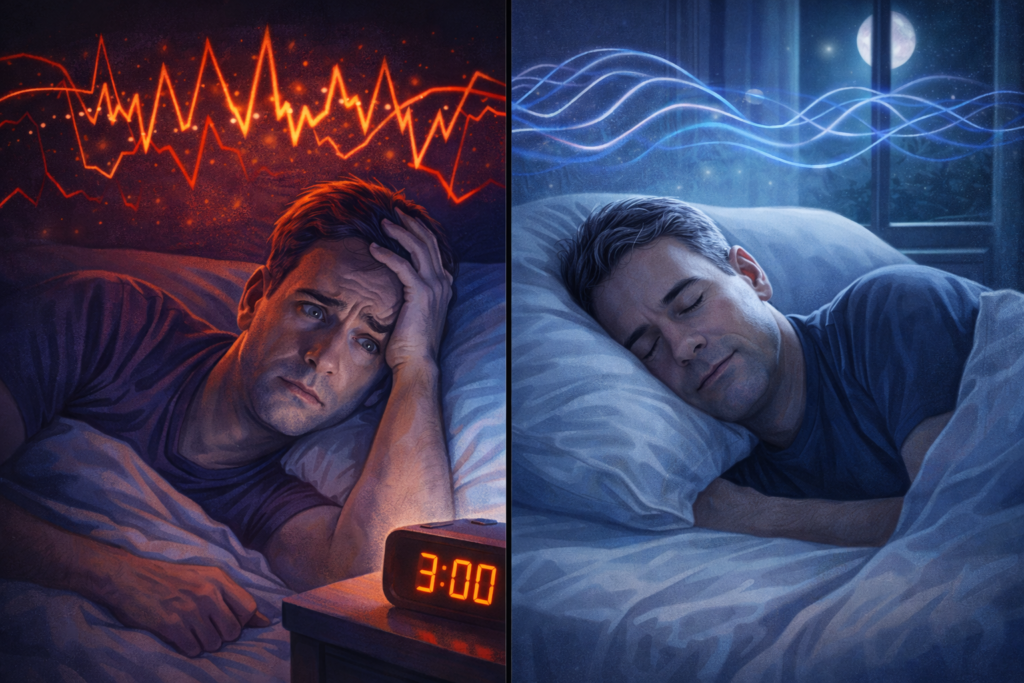
If you’re skimping on sleep or living in chronic stress mode, your metabolism doesn’t stand a chance—regardless of how clean you eat or how hard you exercise.
The Science: Poor sleep is linked to hormonal disruptions that directly impact metabolism. Sleep deprivation decreases leptin (the hormone that signals fullness) and increases ghrelin (the hormone that triggers hunger), leading to increased cravings . It also disrupts glucose metabolism and insulin sensitivity . Research suggests that for every hour less of sleep per night, the risk of obesity increases by 9% .
Chronic stress elevates cortisol, which can :
- Interfere with thyroid function, slowing hormone production that regulates metabolism
- Disrupt blood sugar regulation
- Promote muscle breakdown for energy
- Encourage fat storage, particularly in the abdominal area
How to Apply: Aim for 7-9 hours of quality sleep per night . Establish consistent bed and wake times, even on weekends . Practice stress-reduction techniques like deep breathing, meditation, yoga, or simply spending time in nature .
7. Eat Regular Meals and Avoid Crash Diets
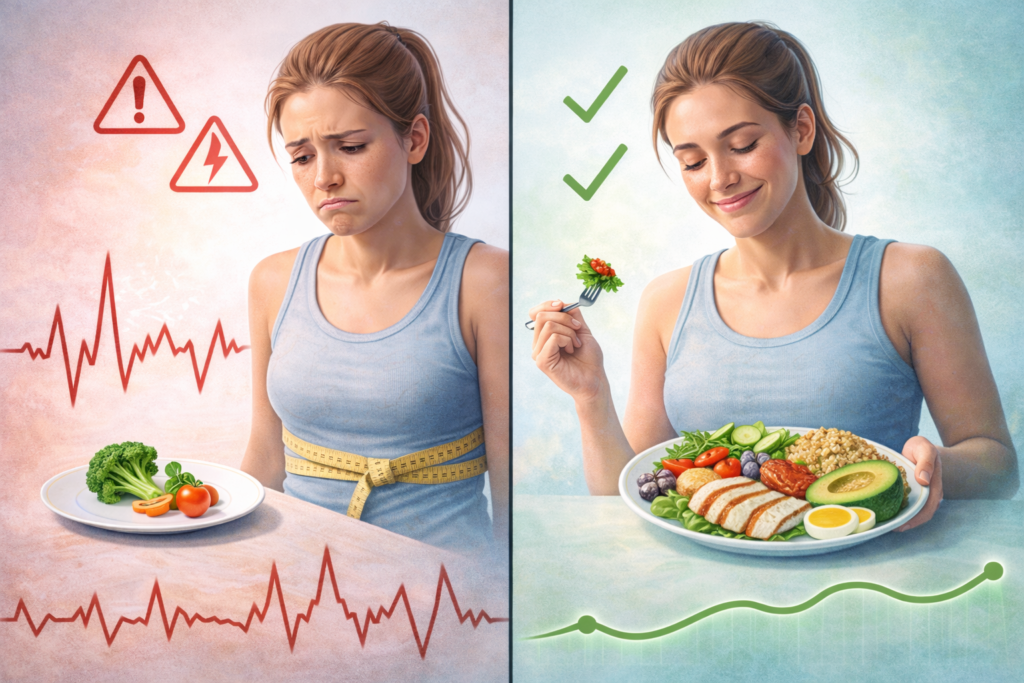
What you eat matters—but so does when and how much you eat. The worst thing you can do for your metabolism is to starve it.
The Science: When you drastically slash calories or skip meals, your body perceives a threat of starvation and shifts into conservation mode, slowing down your basal metabolic rate to save energy . You might lose weight initially, but much of it will be muscle loss, which further lowers metabolism and makes weight regain almost inevitable .
Conversely, eating regular, balanced meals throughout the day helps keep your metabolism active . Cleveland Clinic states: “Fires need to be fed to keep burning. Eating healthy meals and snacks throughout the day helps keep your metabolism active” .
How to Apply: Instead of 2-3 huge meals, consider 5-6 smaller, balanced meals to maintain steady energy and metabolic activity . Focus on whole foods: lean proteins, healthy fats, complex carbohydrates, and plenty of vegetables . Avoid severely restrictive diets that promise rapid weight loss—they almost always backfire metabolically .
When to See a Doctor
While lifestyle changes are powerful, sometimes slow metabolism signals an underlying medical condition requiring professional attention. Consult a healthcare provider if you experience :
- Unexplained weight gain accompanied by fatigue, hair thinning, or dry skin (possible thyroid issues)
- Persistent fatigue or low energy unrelated to sleep habits
- Extreme cold intolerance
- Irregular periods or other hormonal symptoms
- Depression, anxiety, or brain fog
- Difficulty losing weight despite consistent diet and exercise efforts
Conditions like hypothyroidism, PCOS, insulin resistance, and nutrient deficiencies (iron, iodine, vitamin D) can significantly impact metabolic rate and require proper diagnosis and treatment .
The Bottom Line
Boosting your metabolism isn’t about finding one magical food or pill—it’s about consistently layering smart, sustainable habits that work together . Building muscle through strength training, eating adequate protein, staying hydrated, incorporating HIIT workouts, enjoying green tea or coffee, prioritizing sleep and stress management, and avoiding crash diets all contribute to a healthier, more efficient metabolic engine .
Remember: your metabolic rate is not your destiny. While genetics, age, and hormones play a role, you have significant influence through your daily choices . Start with one or two of these strategies, build consistency, and your body will gradually respond by burning calories more efficiently, giving you more energy, and supporting sustainable weight management.
As Cleveland Clinic’s Dr. Griebeler puts it:

Marcio Griebeler, MD
Obesity MedicineEndocrinology




One comment on “Slow Metabolism? 7 Science-Backed Ways to Boost It Naturally”