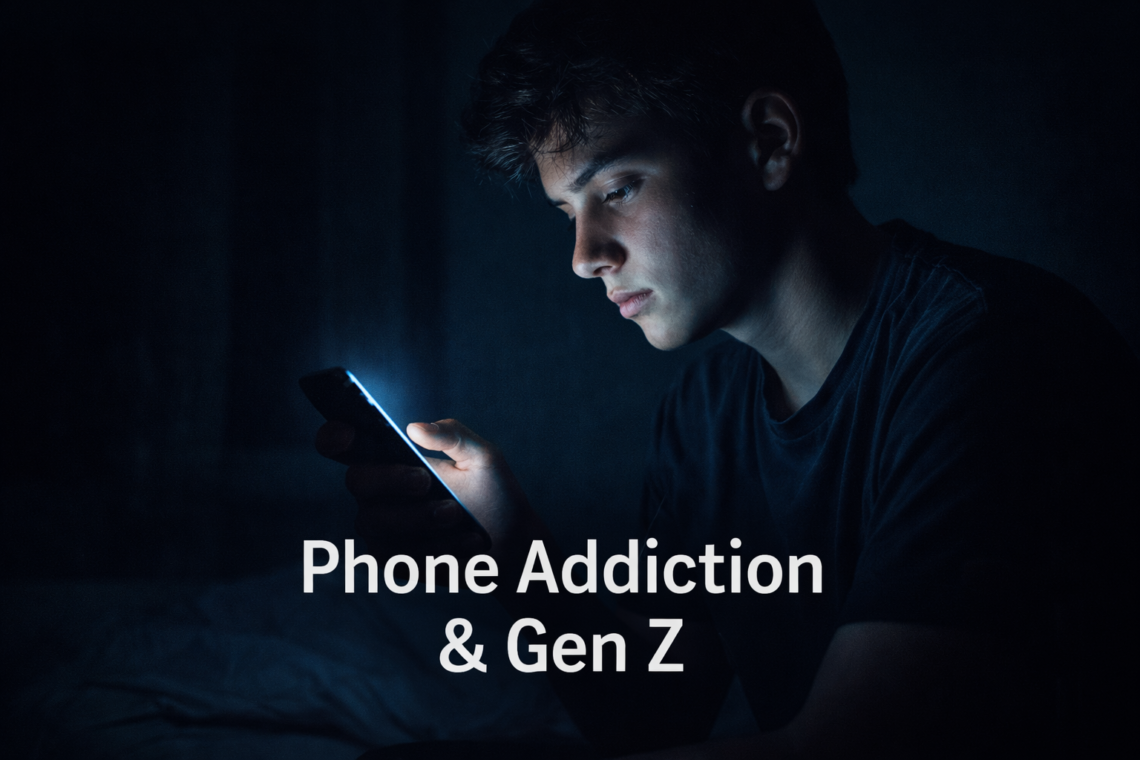
Your teenager is at the dinner table. But they’re not really there.
Their body is present. Their mind? Scrolling through Instagram. Watching TikTok. Responding to Snapchat. Checking notifications that don’t even exist.
You ask a question. They grunt a response without looking up.
You feel invisible. Replaced by a glowing rectangle.
And you’re terrified.
Because you see the changes:
- Mood swings that seem tied to screen time
- Sleep problems
- Declining grades
- Anxiety when separated from the phone
- Social withdrawal from real-world interactions
Here’s the hard truth: This isn’t just “teen behavior.” It’s addiction.
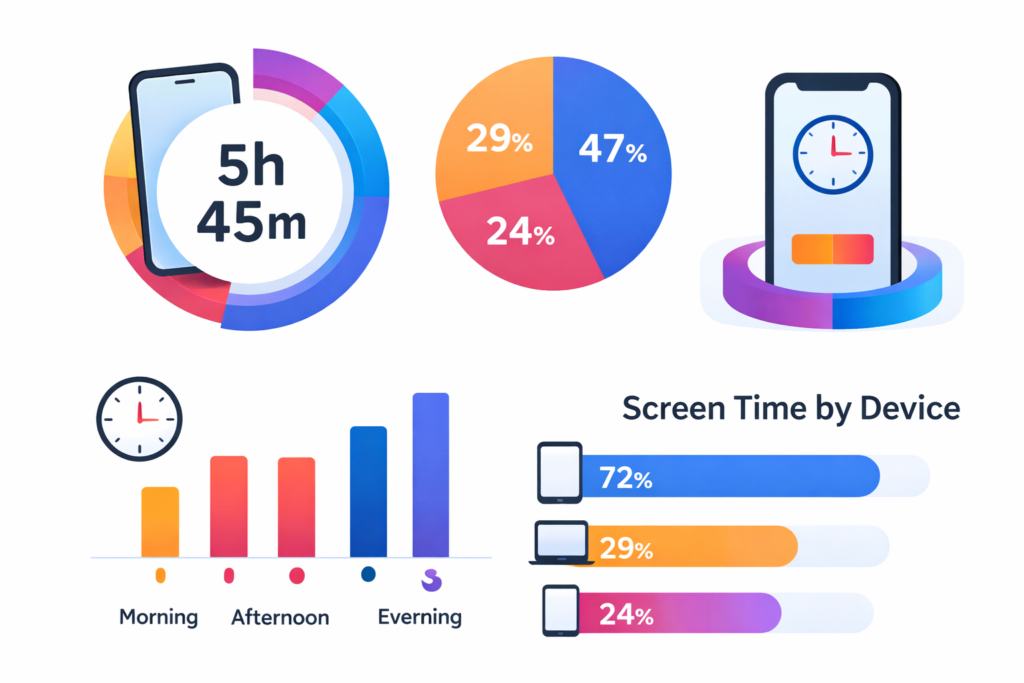
Gen Z (born 1997-2012) is the first generation to grow up with smartphones as a constant companion. The average teen spends 7-9 hours daily on screens—more time than they spend sleeping or in school.
And the consequences are devastating:
- Teen depression rates have increased 60% since 2010
- Anxiety disorders are at record highs
- Sleep deprivation is epidemic
- Attention spans are shrinking
- Real-world social skills are declining
But here’s the good news: It’s not too late.
Parents aren’t powerless. You can help your teen find balance. You can protect their mental health. You can teach them to use technology instead of being used by it.
This isn’t about demonizing phones. It’s about reclaiming childhood.
Let’s talk about what’s really happening—and what you can do about it.
How much screen time is too much for teens
Let’s start with the numbers. They’re alarming.
The Reality of Gen Z Screen Time
According to recent studies:
- Average teen screen time: 7 hours 22 minutes daily (Common Sense Media, 2023)
- Heavy users: 31% of teens spend 10+ hours daily
- Phone checks: Teens check their phones 150-200 times per day
- Night usage: 72% of teens use phones within 30 minutes of bedtime
- Morning usage: 68% check phones within 15 minutes of waking
Compare this to previous generations:
- Millennials (as teens): ~3 hours daily
- Gen X (as teens): ~1 hour (mostly TV)
- Baby Boomers (as teens): ~30 minutes (TV/radio)
Gen Z isn’t just using more technology. They’re living in it.
What Experts Recommend
The American Academy of Pediatrics (AAP) guidelines:
For teens 13-18:
- No specific hour limit
- Focus on balance and quality of screen time
- Ensure screens don’t displace:
- Sleep (8-10 hours nightly)
- Physical activity (60 minutes daily)
- Face-to-face social interaction
- Schoolwork
- Family time
The key question isn’t “how many hours?” but “what is screen time replacing?”
If your teen is:
- Sleeping enough ✓
- Getting good grades ✓
- Exercising regularly ✓
- Having real-world friendships ✓
- Participating in family life ✓
Then moderate screen time is probably okay.
But if screens are displacing these essentials? That’s a problem.
Also Read:

Signs your teen has a phone addiction problem

How do you know if it’s normal use or addiction?
Watch for these warning signs:
🚩 Physical Symptoms
- Sleep disruption: Can’t fall asleep, wakes up tired
- Eye strain: Headaches, dry eyes, blurred vision
- Poor posture: “Text neck,” back pain
- Weight changes: Sedentary lifestyle effects
- Neglected hygiene: Skipping showers, meals
🚩 Behavioral Red Flags
- Phantom vibration syndrome: Thinking phone vibrated when it didn’t
- Panic when separated: Anxiety when phone dies or is taken away
- Secretive behavior: Hiding screen time, using apps in private
- Neglecting responsibilities: Homework, chores, commitments suffer
- Loss of interest: Quitting hobbies, sports, activities they once loved
🚩 Emotional Warning Signs
- Mood swings tied to usage: Irritable when can’t use phone
- Depression or anxiety: Especially after social media use
- FOMO (Fear of Missing Out): Obsessive checking
- Low self-esteem: Comparing self to others online
- Aggression when confronted: Extreme defensiveness about usage
🚩 Social Symptoms
- Withdrawing from family: Prefers phone to family time
- Declining real-world friendships: Online friends replace in-person
- Poor eye contact: Can’t maintain conversation without checking phone
- Social anxiety: Uncomfortable in face-to-face situations
The litmus test: If your teen can’t put the phone down for an hour without becoming anxious, angry, or depressed—that’s addiction.
Why phones are so addictive to teenagers
This isn’t a character flaw. It’s by design.
The Science of Digital Addiction
Tech companies employ neuroscientists and behavioral psychologists to make apps as addictive as possible. They’re not selling products—they’re selling attention.
Here’s how they hook your teen’s brain:
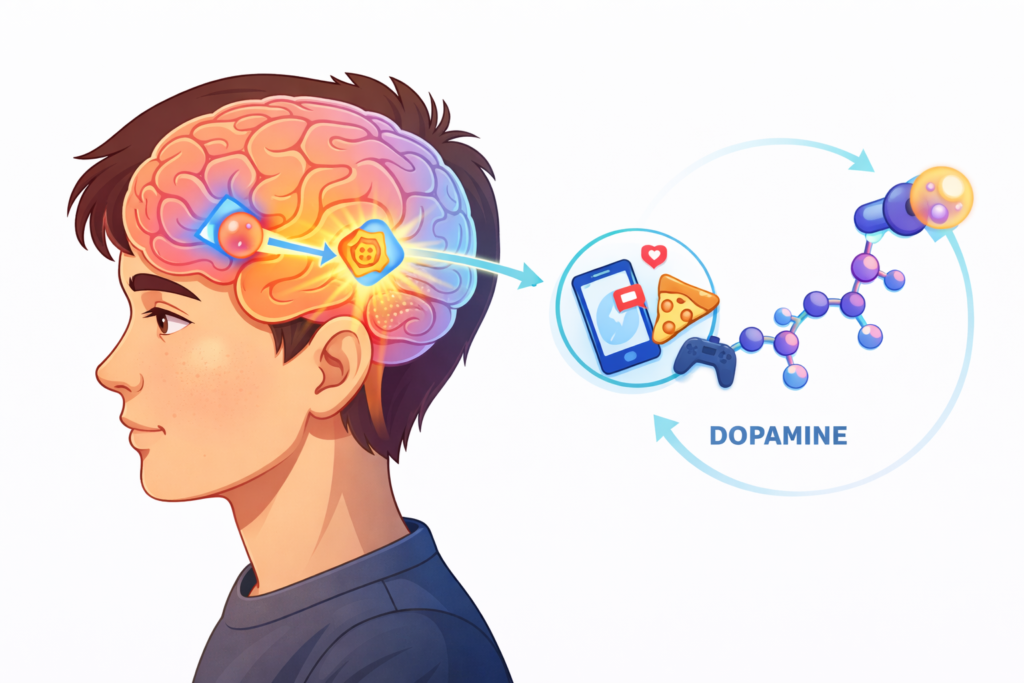
1. Dopamine Loops
Every notification, like, or comment triggers a dopamine hit—the same neurotransmitter involved in drug addiction.
- Post a photo → Wait for likes → Dopamine rush
- Get a text → Immediate response → Dopamine hit
- Scroll TikTok → Endless novelty → Continuous dopamine
The brain craves more. It’s a chemical dependency.
2. Variable Rewards (Slot Machine Effect)
Social media works like a slot machine:
- Sometimes you get lots of likes (jackpot!)
- Sometimes you get nothing (loss)
- The uncertainty keeps you pulling the lever (scrolling)
This is called intermittent variable reward—the most powerful form of behavioral conditioning.
3. Fear of Missing Out (FOMO)
Teens are developmentally wired for social connection. Social media exploits this:
- “Everyone is hanging out without me”
- “If I don’t respond immediately, they’ll forget me”
- “I need to stay connected 24/7”
The anxiety of disconnection keeps them glued to screens.
4. Infinite Scroll & Autoplay
Apps are designed to remove stopping cues:
- No natural end point (unlike a book chapter or TV episode)
- Content never runs out
- Autoplay starts the next video automatically
Your teen isn’t weak—they’re fighting billion-dollar algorithms designed by PhDs.
5. The Teen Brain Is Vulnerable
Here’s the critical piece: The adolescent brain is uniquely susceptible to addiction.
- Prefrontal cortex (impulse control) isn’t fully developed until age 25
- Reward system is hyperactive during teens
- Social validation is neurologically crucial for identity formation
Teens aren’t just “bad at self-control.” Their brains are literally wired to seek rewards and peer approval.
Tech companies know this. They exploit it.
The real impact of phone addiction on Gen Z
This isn’t exaggeration. The data is clear.
Mental Health Crisis
Depression & Anxiety:
- Teen depression increased 60% from 2010-2023 (CDC)
- Anxiety disorders up 40% in the same period
- Strong correlation with social media use (especially Instagram, TikTok)
- Girls affected more severely than boys
Suicide & Self-Harm:
- Teen suicide rates have doubled since 2007
- Emergency room visits for self-harm up 300% (2010-2023)
- Cyberbullying plays a significant role
Sleep Deprivation Epidemic
- 73% of teens get less than 8 hours of sleep (recommended: 8-10)
- Blue light from screens suppresses melatonin by 50%
- Nighttime notifications cause sleep fragmentation
- Sleep-deprived teens have:
- Weaker immune systems
- Higher obesity risk
- Poorer academic performance
- Increased depression risk
Academic Decline
- Attention spans dropped from 12 seconds (2000) to 8 seconds (2024)
- Deep reading ability declining
- Multitasking reduces learning efficiency by 40%
- Grades correlate inversely with screen time
Physical Health Problems
- Obesity rates: 1 in 5 teens (tripled since 1970s)
- Vision problems: Digital eye strain, myopia increasing
- Posture issues: “Text neck,” chronic back pain
- Reduced physical activity: Only 24% of teens get 60 min daily exercise
Social Skills Erosion
- Face-to-face conversation anxiety increasing
- Empathy levels declining
- Conflict resolution skills weaker
- Loneliness at record highs despite “connection”
The paradox: Gen Z is the most “connected” generation in history—and the loneliest.
10 Practical strategies parents can use today

You can’t control everything. But you’re not powerless.
Here are science-backed, practical strategies you can implement starting today.
Strategy #1: Create Phone-Free Zones & Times
What to do:
- No phones at the dinner table (ever—non-negotiable)
- No phones in bedrooms overnight (charge in kitchen/common area)
- Phone-free first hour after waking
- Phone-free last hour before bed
- Phone-free family activities (game night, outings)
Why it works:
- Protects sleep quality
- Preserves family connection
- Creates natural boundaries
- Models healthy behavior
How to enforce:
- Get a family charging station (basket in kitchen)
- Buy traditional alarm clocks for bedrooms
- Use app blockers during designated times (Freedom, Cold Turkey)
- Lead by example: You follow the same rules
Strategy #2: Use Technology to Fight Technology
What to do:
- Enable Screen Time (iOS) or Digital Wellbeing (Android)
- Set app limits: 1-2 hours daily for social media
- Use downtime mode: Blocks non-essential apps during sleep hours
- Install content filters if appropriate
- Review weekly screen time reports together
Recommended apps:
- Forest: Gamifies staying off phone (plant trees)
- Freedom: Blocks apps/websites across devices
- OurPact: Parental control with scheduling
- Moment: Tracks and limits usage
- Space: Helps build mindful phone habits
Why it works:
- Removes willpower from the equation
- Creates external accountability
- Provides data for conversations
- Reduces friction in enforcement
Strategy #3: Have the “Why” Conversation (Not Just Rules)
What NOT to do: ❌ “Because I said so” ❌ “Phones are bad” ❌ “You’re addicted” (accusatory)
What TO do: ✅ Ask questions:
- “How do you feel after 3 hours on TikTok?”
- “What do you enjoy about being online?”
- “What do you miss when you’re on your phone?”
✅ Share information:
- “I read that blue light affects sleep. Want to test it?”
- “Studies show multitasking reduces learning. Let’s experiment.”
✅ Collaborate on solutions:
- “What do you think is a fair limit?”
- “How can we make this work for both of us?”
Why it works:
- Teens resist control but respond to respect
- Builds critical thinking
- Creates buy-in vs. compliance
- Strengthens relationship
Strategy #4: Model the Behavior You Want to See
Hard truth: If you’re on your phone constantly, your teen will be too.
What to do:
- Put your phone away during family time
- Don’t check emails at dinner
- No scrolling while talking to your teen
- Announce phone breaks: “I’m putting my phone away for an hour”
- Apologize when you slip: “I was on my phone too much today”
Why it works:
- Actions speak louder than words
- Builds credibility
- Shows it’s a family value, not just a teen restriction
- Creates accountability for everyone
Strategy #5: Encourage Real-World Alternatives
You can’t just remove the phone. You must replace it with something better.
What to do:
- Support hobbies: Sports, music, art, coding, cooking
- Plan family activities: Hiking, board games, cooking together
- Encourage in-person friendships: Host gatherings, drive to events
- Volunteer together: Builds purpose and connection
- Get a pet: Responsibility + companionship
Why it works:
- Fills the void left by reduced screen time
- Provides dopamine from real achievements
- Builds identity beyond digital presence
- Creates positive memories
Strategy #6: Teach Digital Literacy & Critical Thinking
What to do:
- Discuss algorithms: “TikTok shows you what keeps you scrolling”
- Talk about manipulation: “Ads are designed to make you feel inadequate”
- Analyze social media: “Is that photo real or filtered?”
- Discuss privacy: “What data are you sharing?”
- Teach skepticism: “Not everything online is true”
Conversation starters:
- “Why do you think Instagram is free? What’s the real product?”
- “How does TikTok know what you’ll like?”
- “What happens to your data when you use free apps?”
Why it works:
- Empowers teens to make informed choices
- Builds resistance to manipulation
- Develops critical thinking skills
- Shifts from passive consumption to active awareness
Strategy #7: Implement a “Phone Contract”
What to do: Create a written agreement that includes:
- Screen time limits (daily/weekly)
- Phone-free times (meals, bedtime, family activities)
- Consequences for breaking rules
- Privileges for responsible use
- Regular review (monthly check-ins)
Sample contract elements: ✅ Weekday limit: 2 hours social media ✅ Weekend limit: 3 hours social media ✅ No phones after 10 PM ✅ Homework before entertainment ✅ Charge phone in kitchen overnight ✅ Consequence: Lose phone for 24 hours if rules broken
Why it works:
- Clear expectations
- Consistent enforcement
- Fair consequences
- Collaborative approach
Strategy #8: Address the Root Causes
Important: Phone addiction is often a symptom, not the problem.
Ask yourself:
- Is my teen lonely or anxious?
- Are they struggling academically?
- Do they feel inadequate or unaccepted?
- Is there family conflict or stress?
- Are they depressed?
What to do:
- Listen without judgment
- Validate feelings: “That sounds really hard”
- Seek professional help if needed (therapist, counselor)
- Address underlying issues, not just screen time
Why it works:
- Treats the cause, not the symptom
- Builds trust
- Shows you care about them, not just their behavior
- More sustainable long-term change
Strategy #9: Create a Family Media Plan
What to do: Develop a comprehensive plan that includes:
- Screen time limits for everyone (parents too!)
- Content guidelines (age-appropriate apps/games)
- Privacy rules (what can/can’t be shared online)
- Digital citizenship (how to treat others online)
- Tech-free times/zones (family-wide)
- Regular family meetings to review/adjust
Resources:
- Common Sense Media: Age-based app reviews
- AAP Family Media Plan Tool: Free online planner
- Family media agreements: Templates available online
Why it works:
- Whole-family approach
- Consistent rules
- Prevents “but everyone else does it”
- Builds shared values
Strategy #10: Know When to Seek Professional Help
Warning signs that require intervention:
- Severe depression or anxiety
- Self-harm or suicidal thoughts
- Complete social withdrawal
- Dramatic personality changes
- Violent reactions when phone is removed
- School refusal or academic collapse
- Eating disorders linked to social media
What to do:
- Consult pediatrician for referrals
- Find a therapist specializing in adolescents
- Consider digital detox programs (if severe)
- Join support groups for parents
- Don’t wait—early intervention is critical
Resources:
- Crisis Text Line: Text HOME to 741741
- National Suicide Prevention Lifeline: 988
- Common Sense Media: Parent resources
- American Academy of Pediatrics: Screen time guidelines
What NOT to do (common parenting mistakes)
Even with good intentions, parents make mistakes that backfire.
❌ Mistake #1: Cold Turkey Confiscation
What happens: You take the phone away completely. Result: Teen becomes secretive, resentful, finds workarounds.
Better approach: Gradual reduction + collaboration.
❌ Mistake #2: Spyware & Secret Monitoring
What happens: You install tracking apps without telling them. Result: Destroys trust, teen feels violated.
Better approach: Transparent monitoring + open conversation.
❌ Mistake #3: Using Phone as Reward/Punishment Only
What happens: Phone becomes the only leverage. Result: Increases obsession, creates power struggle.
Better approach: Balanced approach with natural consequences.
❌ Mistake #4: Hypocrisy
What happens: You restrict teen while scrolling constantly. Result: Teen sees rules as unfair, doesn’t respect them.
Better approach: Family-wide rules, lead by example.
❌ Mistake #5: Ignoring the Positive
What happens: You demonize all screen time. Result: Teen feels misunderstood, shuts down.
Better approach: Acknowledge benefits (creativity, connection, learning).
❌ Mistake #6: Shaming or Blaming
What happens: “You’re addicted,” “You’re lazy,” “You’re wasting your life.” Result: Teen feels attacked, becomes defensive.
Better approach: Express concern, ask questions, collaborate.
Finding balance: technology isn’t the enemy

Here’s the critical perspective: Phones aren’t inherently bad.
They offer real benefits:
- Connection: Staying in touch with friends/family
- Learning: Access to information, tutorials, courses
- Creativity: Video editing, music production, digital art
- Career skills: Digital literacy is essential for modern jobs
- Support communities: Finding others with shared experiences
The goal isn’t elimination. It’s balance.
Help your teen develop:
- Self-awareness: “How does this make me feel?”
- Self-regulation: “I can put this down when I need to”
- Critical thinking: “Is this serving me or controlling me?”
- Digital citizenship: “How do I use technology responsibly?”
These skills will serve them for life.
Conclusion: you’re not alone in this fight
Parenting in the digital age is hard.
You’re fighting against:
- Billion-dollar tech companies
- Algorithms designed by neuroscientists
- Peer pressure amplified by social media
- A culture that normalizes constant connectivity
But you’re not powerless.
Start small:
- Pick one strategy from this article
- Implement it this week
- Be consistent
- Adjust as needed
Remember:
- Progress over perfection: Small changes add up
- Connection over control: Relationship is your greatest tool
- Patience over panic: Change takes time
- Compassion over criticism: Your teen is struggling too
The goal isn’t a perfect teen with perfect phone habits.
The goal is a healthy, balanced, resilient young adult who can navigate the digital world without being consumed by it.
You can help them get there.
One conversation. One boundary. One phone-free dinner at a time.
Frequently Asked Questions (FAQs)
Q: How many hours of screen time is okay for teenagers?
A: There’s no magic number. Focus on balance: ensure screens don’t displace sleep (8-10 hours), physical activity (60 min daily), schoolwork, and face-to-face relationships. Most experts suggest 2-3 hours of recreational screen time daily is reasonable.
Q: Should I take my teen’s phone away at night?
A: Yes. Experts recommend phones charge outside the bedroom overnight. Blue light disrupts sleep, and nighttime notifications cause sleep fragmentation. Use a traditional alarm clock instead.
Q: My teen gets violent when I mention limiting phone time. What do I do?
A: This is a serious sign of addiction. Seek professional help from a therapist specializing in adolescent behavioral health. Don’t try to handle severe addiction alone.
Q: How do I monitor my teen’s phone without invading privacy?
A: Be transparent. Tell them you’ll be monitoring. Use built-in tools (Screen Time, Digital Wellbeing) together. Focus on safety (predators, bullying) not spying. Build trust through open communication.
Q: What if my teen needs phone for school?
A: Distinguish between educational and recreational use. Allow phone for homework/research but limit social media/gaming. Use app blockers during study time. Teach time management.
Q: Should I allow social media for my teen?
A: Most platforms require users to be 13+. Consider waiting until 15-16 if possible. If allowing it: set privacy settings, discuss risks, monitor usage, and maintain open dialogue about online experiences.
Q: How do I know if my teen’s phone use is normal or addiction?
A: Warning signs include: inability to reduce use, withdrawal symptoms when separated, neglecting responsibilities, declining grades, sleep problems, social withdrawal, and mood changes tied to usage.
Q: What apps can help reduce screen time?
A: Try Forest (gamified focus), Freedom (app blocking), Moment (tracking), OurPact (parental controls), Space (mindful usage), and built-in tools like Screen Time (iOS) or Digital Wellbeing (Android).
Also Read:
- Every Breath You Take: The Terrifying Truth About Modern Lung Health
- Mobile Phone Addiction Is Destroying Gen Z! What Parents Can Do (Practical Solutions in 2026)
- Flight 236 Mystery: The Plane That Ran Out of Fuel and Glided to Safety
- What is Lunar Eclipse? Types, Causes, History, Significance, Mythology, and Facts
- The Posture-Productivity Link: How Sitting Wrong Kills Your Focus (And 3 Fixes That Work)