
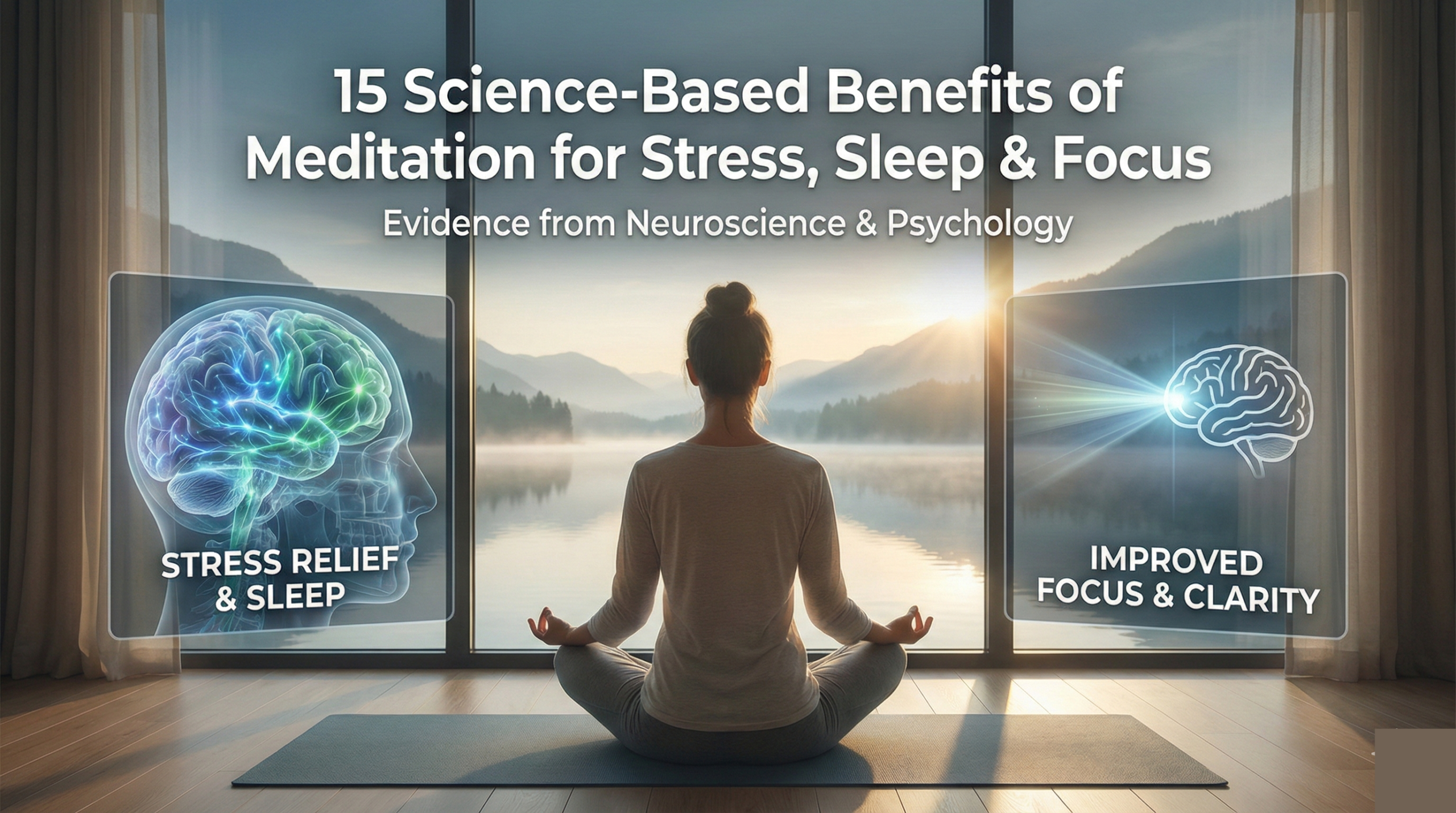
Does your mind feel like a browser with too many tabs open? You aren’t alone. This mental clutter is the main reason why meditate is no longer just for spiritual gurus—it is a practical survival tool for modern life. Adopting a simple daily practice is one of the most effective, natural ways to access powerful mental health benefits without medication or expensive therapy. The best part? You don’t need to change your entire lifestyle to feel the difference. Here is how a few minutes of silence can become the most productive part of your day.
Why Meditation Works Faster Than You Think
Meditation is often described as a long, spiritual journey—but modern science tells a more practical story. You don’t need years of practice, retreats, or extreme discipline to experience benefits. In fact, many people notice real changes within days or weeks of starting meditation.
From calmer thoughts to better sleep and sharper focus, meditation directly influences the nervous system, brain chemistry, and stress response. That’s why it’s now recommended not just by spiritual teachers, but also by doctors, psychologists, and neuroscientists.
Below are 15 proven benefits of meditation that people commonly feel quickly, often within the first few weeks of consistent practice.

Reduces Stress Almost Immediately
One of the fastest and most noticeable effects of meditation is stress reduction.
Meditation activates the parasympathetic nervous system—the body’s “relax mode.” This lowers cortisol (the stress hormone) and slows racing thoughts.
What people feel quickly:
- Less mental pressure
- Calmer reactions to daily problems
- Reduced feeling of being overwhelmed
Even 10 minutes a day can make a difference.
Calms Anxiety and Restlessness
Meditation helps break the cycle of overthinking by training the mind to observe thoughts rather than chase them.
Within days, many people report:
- Fewer anxious spirals
- Less physical tension (tight chest, shallow breathing)
- A greater sense of emotional safety
This is why meditation is often recommended for generalized anxiety and panic symptoms.
Improves Sleep Quality
Meditation relaxes the brain and body before bedtime, making it easier to fall asleep naturally.
Quick sleep benefits include:
- Falling asleep faster
- Fewer nighttime awakenings
- Deeper, more refreshing sleep
Unlike sleeping pills, meditation has no side effects and improves sleep long-term.
Sharpens Focus and Concentration
Meditation trains attention like a muscle. Even short-term practice improves the brain’s ability to stay present.
People often notice:
- Better concentration at work or study
- Less distraction from phones and notifications
- Faster task completion
This is especially useful in today’s high-distraction digital environment.
Regulates Emotions Better
Meditation increases awareness of emotional triggers, allowing space between feeling and reaction.
Quick emotional benefits:
- Less anger outbursts
- Improved patience
- Better emotional control in conflicts
You may still feel emotions—but they don’t control you as strongly.
Lowers Blood Pressure Naturally
Relaxation techniques in meditation help dilate blood vessels and reduce strain on the heart.
Within weeks, some people experience:
- Slight reduction in blood pressure
- Slower heart rate
- Less physical tension
This makes meditation a powerful support practice for heart health.
Improves Breathing and Oxygen Flow
Most meditation techniques emphasize slow, deep breathing, which improves lung efficiency.
Quick effects include:
- Deeper breaths
- Reduced breathlessness
- Better oxygen supply to the brain
This alone can make you feel calmer within minutes.
Boosts Mental Clarity and Decision-Making
When the mind is less noisy, thinking becomes clearer.
People often report:
- Better judgment
- Reduced impulsive decisions
- Clearer priorities
This benefit is especially noticeable during stressful situations.
Reduces Physical Tension and Pain
Meditation relaxes muscles and reduces the brain’s pain sensitivity.
Quick pain-related benefits:
- Less neck and shoulder stiffness
- Reduced tension headaches
- Better body awareness
Many chronic pain patients use meditation as a non-drug pain management tool.
Enhances Mood and Positivity
Meditation increases the activity of brain regions associated with happiness and emotional balance.
Within a short time, people feel:
- More emotional stability
- Less irritability
- A subtle sense of well-being
This is why meditation is often recommended alongside therapy for mild depression.
Improves Self-Awareness
Meditation helps you notice thought patterns, habits, and emotional reactions more clearly.
Quick changes include:
- Better understanding of your own behavior
- Awareness of negative thinking loops
- Stronger sense of inner control
This awareness is the foundation of long-term personal growth.
Reduces Overthinking
Meditation doesn’t stop thoughts—but it stops you from getting stuck in them.
People quickly notice:
- Thoughts come and go more easily
- Less mental replay of past events
- Reduced worry about the future
This is one of the most freeing benefits of meditation.
Improves Memory and Learning Ability
Meditation enhances attention and reduces mental clutter, which improves memory retention.
Short-term benefits:
- Better recall of information
- Improved learning efficiency
- Less mental fatigue
Students and professionals often see results within 2–4 weeks.
Strengthens Mind–Body Connection
Meditation reconnects you with physical sensations, emotions, and breath.
Quick results:
- Better posture awareness
- Improved response to hunger and fatigue
- More mindful daily habits
This leads to healthier lifestyle choices without force.
Creates a Sense of Inner Calm and Stability
Perhaps the most powerful benefit is subtle but profound: inner steadiness.
People describe it as:
- Feeling grounded
- Less reactive to chaos
- A quiet confidence
This calm doesn’t depend on external situations—it comes from within.
How quickly do meditations benefits appear?
- Immediately: Calmness, slower breathing, reduced tension
- 1–2 weeks: Better sleep, focus, emotional control
- 3–4 weeks: Reduced anxiety, improved mood, clearer thinking
Consistency matters more than duration.
How Much Meditation Is Enough?
You don’t need hours.
Recommended for beginners:
- 10–15 minutes daily
- Simple breathing or guided meditation
- Same time each day
Small, consistent practice beats long, irregular sessions.

⚠️ Common Myths (Quickly Clarified)
- ❌ “You need to be spiritual” → It’s a mental skill
- ❌ “Meditation stops thoughts” → It trains awareness
- ❌ “It takes years to work” → Benefits can appear fast
Important Points
- Meditation works faster than most people expect
- Benefits affect mind, body, and emotions
- Just 10 minutes a day can create change
- It’s safe, free, and accessible to everyone
- Consistency matters more than perfection
Meditation is not about escaping life—it’s about meeting life with clarity, calm, and balance.
In a world filled with noise, speed, and stress, meditation offers something rare:

A way to feel better from the inside—quickly and naturally.
Also Read:


3 Comments on “15 Science-Based Benefits of Meditation for Stress, Sleep & Focus”