


It was supposed to be a routine overnight flight from Toronto to Lisbon.
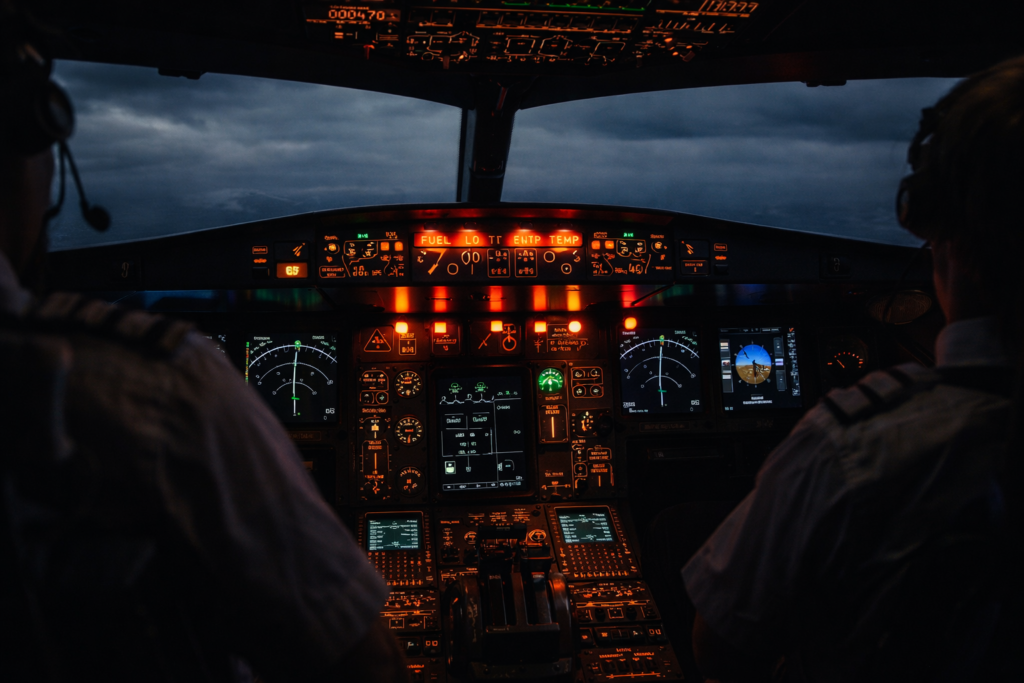
293 passengers and 13 crew members boarded Air Transat Flight 236 on August 24, 2001, expecting to land in Portugal after seven hours. What they got instead was one of the most miraculous emergency landings in aviation history.
At 39,000 feet over the middle of the Atlantic Ocean, both engines failed. The plane had run out of fuel.
No power. No thrust. Just 100 tons of metal and people gliding toward the ocean.
The pilots had one chance: glide the plane 75 miles to a small island in the Azores. If they missed, they’d crash into the Atlantic.
This is the incredible true story of Flight 236—the plane that defied physics, the pilots who refused to give up, and the passengers who lived to tell the tale.
What happened to air transat flight 236
The Flight Plan
Air Transat Flight 236 was a scheduled service from Toronto Pearson International Airport to Lisbon Portela Airport in Portugal. The aircraft was an Airbus A330-243, a modern twin-engine wide-body jet considered one of the safest planes in the world.
Captain Robert Piché (48) and First Officer Dirk DeJager (28) were in the cockpit. Both were experienced pilots, though DeJager was relatively new to the A330.
The flight departed Toronto at 8:52 PM local time on August 23, 2001. Everything was normal for the first four hours.
The Fuel Leak Begins
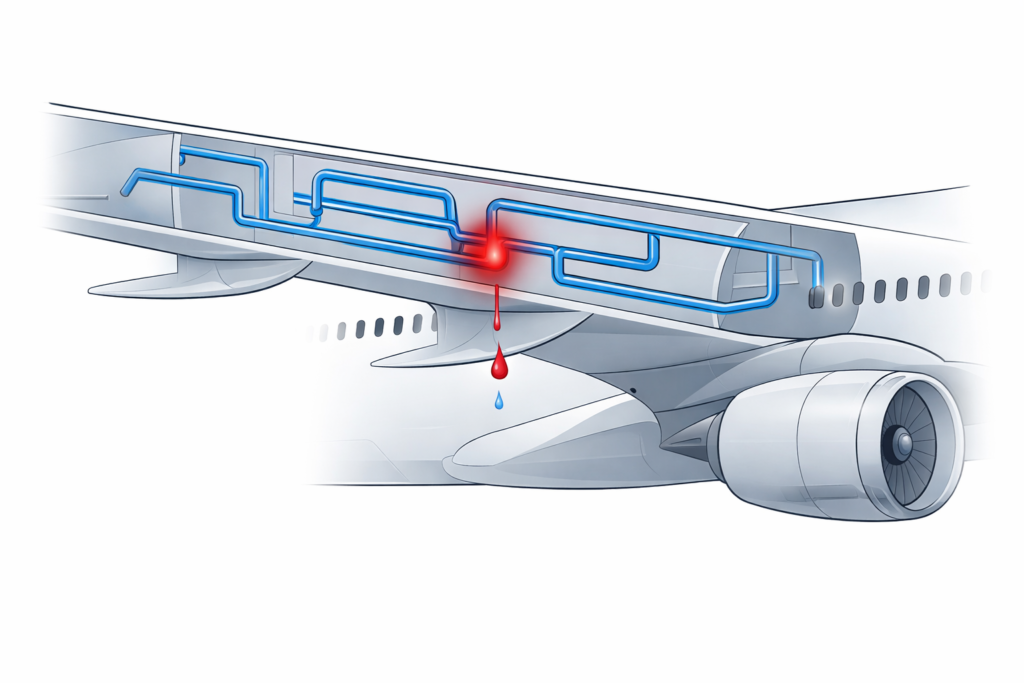
What the crew didn’t know: a fuel leak had started shortly after takeoff.
A maintenance error during engine replacement had caused a hydraulic line and fuel line to rub against each other. Over hours of flight, the friction wore through the fuel line, causing jet fuel to spray out into the atmosphere.
The plane was literally bleeding fuel.
The Warning Signs
At around 5:30 AM UTC, over the Atlantic, warning lights started flashing:
- Oil temperature warnings for engine #2
- Fuel imbalance alerts showing more fuel in one wing than the other
- Fuel quantity decreasing faster than normal
Initially, the crew thought it was a computer glitch. The A330 was fly-by-wire, heavily dependent on computers. Maybe the sensors were wrong.
But the fuel gauges kept dropping.
The Engine Failure
At 6:13 AM UTC, about 5.5 hours into the flight, engine #2 flamed out.
The crew declared an emergency and began troubleshooting. They decided to divert to Lajes Air Base in the Azores, a Portuguese military base about 300 miles away.
But then, at 6:26 AM, engine #1 also failed.
Both engines. No power. At 34,500 feet. Over the ocean.
The plane became the world’s largest glider.
How did flight 236 lose all fuel
The Maintenance Error
The root cause was a seemingly small mistake during maintenance.
Days before the flight, the right engine (#2) had been replaced. During the replacement, mechanics used a non-standard part—a hydraulic pump from an older A330 model that didn’t quite fit properly.
The hydraulic line and fuel line were supposed to be separated by a specific clearance. But the mismatched parts caused them to rub against each other during flight.
The Fuel Leak
Over the Atlantic, the constant vibration caused the lines to wear through. Fuel began spraying out at an alarming rate—about 1,000 kg (2,200 lbs) per minute.
The crew had no warning of the leak itself. The plane’s computers showed fuel was being used, but not why it was disappearing so fast.
By the time they realized the severity, it was too late to prevent total fuel exhaustion.
Why Didn’t They Detect It Sooner?
Several factors contributed:
- Computer limitations: The A330’s fuel monitoring system wasn’t designed to detect leaks of this magnitude
- Fuel imbalance: The leak caused uneven fuel distribution, which the crew initially treated as a minor issue
- Night flight: Over the dark ocean, there were no visual clues
- Modern complacency: Jets don’t just “run out of fuel”—it’s supposed to be impossible with proper planning
The plane had taken off with enough fuel for the journey plus reserves. But the leak burned through everything.
The miracle glide: 75 miles with no engines
The Impossible Math
When both engines failed, Flight 236 was at 34,500 feet, about 300 miles from the nearest land (the Azores).
An Airbus A330 is not designed to glide. It’s designed to fly with engines. Without power, it becomes a very heavy, very inefficient glider.
The glide ratio was approximately 15:1—for every 1 foot of altitude lost, the plane could travel 15 feet forward.
Captain Piché calculated: they had just enough altitude to reach Lajes Air Base. But they had to be perfect. Any mistake, any miscalculation, and they’d crash into the ocean.
Captain Piché’s Secret Weapon
Here’s where the story gets even more incredible.
Captain Robert Piché wasn’t just an airline pilot. Before his commercial career, he had flown gliders in Canada. He understood aerodynamics, glide ratios, and energy management in a way most jet pilots never learn.
This wasn’t luck. This was skill meeting circumstance.
Piché later said: “I had about 10,000 hours in gliders. I knew exactly what to do.”
The Glide
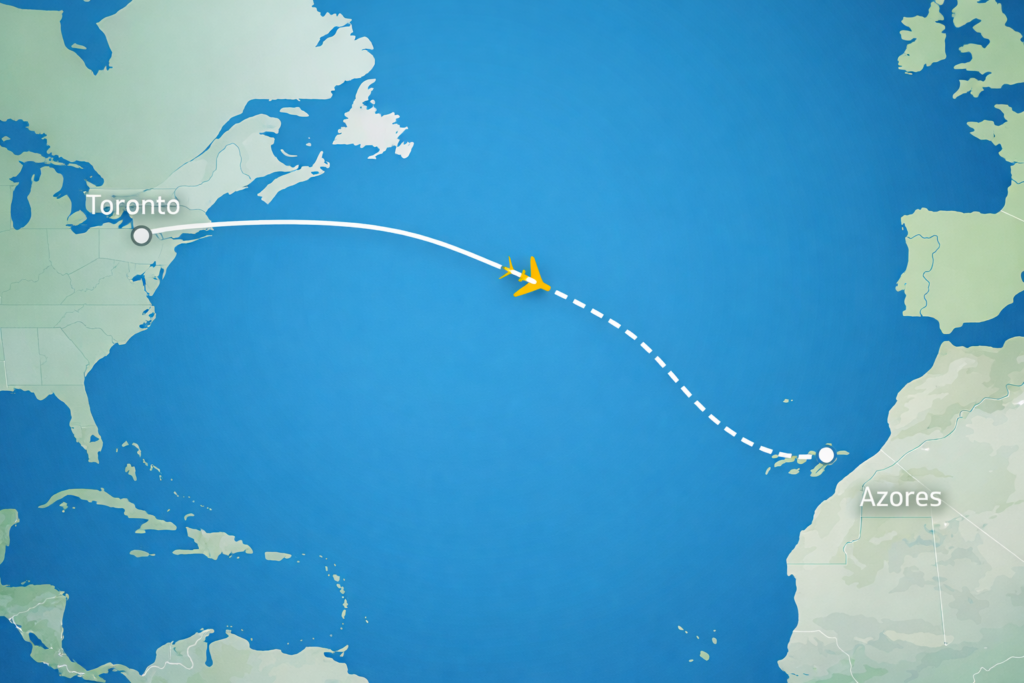
The crew made critical decisions:
- Descend to optimal glide altitude: They dropped to around 13,000 feet for best efficiency
- Maintain precise airspeed: Too fast = lose altitude quickly. Too slow = stall and crash
- Navigate without engines: The plane’s systems were running on batteries and a small ram air turbine (RAT)
- Prepare for water landing: They briefed the cabin crew for a possible ditching
For 17 minutes, the plane glided silently through the night. No engine noise. Just the sound of air rushing past.
Passengers reported an eerie calm. Some prayed. Some cried. Others just waited.
The Approach to Lajes
As they approached the Azores, a new problem emerged: they were coming in too high and too fast.
Without engines, they couldn’t go around for another approach. This was one chance only.
Piché executed a series of 360-degree turns to lose altitude without gaining speed. It was risky—each turn brought them closer to stalling.
But he made it work.
Also Read:

The emergency landing at lajes air base
Touchdown
At 6:46 AM UTC, Flight 236 touched down at Lajes Air Base.
The landing was hard—the plane hit the runway at 200 knots (230 mph), well above normal landing speed. Eight of the main landing gear tires burst from the impact.
But the plane stayed on the runway.
It skidded for about 800 meters before coming to a stop.
The Aftermath
Miraculously, everyone survived.
- 16 passengers and 2 crew members sustained injuries (mostly from the hard landing and evacuation)
- 2 passengers had serious injuries but survived
- Zero fatalities
It was the longest glide in aviation history for a commercial airliner—75 miles (120 km) without engines.
Passenger Accounts
Survivors described the moment:
“When the engines stopped, it was so quiet. That’s when I knew we were in serious trouble.” — Passenger account
“The pilots kept their cool. They were calm on the intercom. That kept us calm.” — Survivor testimony
“When we touched down and realized we were alive, everyone hugged everyone. Strangers crying together.” — Passenger interview
Why flight 236 is important for aviation safety
Record-Breaking Achievement
Flight 236 set several records:
- Longest glide by a commercial airliner: 75 miles
- Most successful ditching preparation that wasn’t needed: Perfect crew coordination
- Proof that skill beats technology: Human judgment saved the day
Safety Changes Implemented
The incident led to major changes in aviation:
- Improved fuel monitoring systems: New sensors to detect abnormal fuel consumption
- Better maintenance protocols: Stricter checks on part compatibility
- Enhanced pilot training: More emphasis on engine-out procedures and glide techniques
- Fuel crossfeed procedures: Updated guidelines for managing fuel imbalance
The Investigation
Portuguese and French aviation authorities conducted a thorough investigation. They concluded:
- Primary cause: Improper maintenance leading to fuel leak
- Contributing factors: Inadequate fuel monitoring, crew’s initial misdiagnosis
- No blame on pilots: Piché and DeJager were praised for their handling
Air Transat was fined $250,000 CAD for maintenance errors.
Captain robert piché: the glider pilot who saved 306 lives

Captain Robert Piché is a Canadian pilot famous for successfully landing Air Transat Flight 236 in the Azores on August 24, 2001.
The Man Behind the Controls
Robert Piché wasn’t your typical airline captain.
Before joining Air Transat, he had:
- Flown gliders competitively in Canada
- Worked various flying jobs, from bush pilot to charter flights
- Accumulated over 16,000 flight hours
His glider experience was the difference between life and death that day.
His Response
After the landing, Piché was humble:
“I just did my job. Any pilot would have done the same.”
But experts disagreed. The combination of skill, calm under pressure, and glider knowledge was rare.
Recognition
Piché and DeJager received numerous awards:
- Superior Airmanship Award from the International Federation of Air Line Pilots’ Associations
- Medal of Merit from the Portuguese government
- Recognition as national heroes in Canada
Piché continued flying until retirement in 2018. He still gives talks about the incident, emphasizing crew resource management and safety.
Lessons learned from flight 236
For Aviation Industry
- Maintenance matters: Small errors can have catastrophic consequences
- Human skill still beats automation: When technology fails, pilots must think
- Training for the impossible: Pilots need to practice scenarios they’ll hopefully never face
- Fuel is life: Better monitoring and redundancy needed
For Passengers
- Listen to safety briefings: The crew’s preparation saved lives
- Stay calm in emergencies: Panic kills; composure saves
- Trust the professionals: Pilots train for years for moments like this
For Everyone
Flight 236 teaches us about:
- Preparation meeting opportunity: Piché’s glider training seemed irrelevant until it was everything
- Teamwork under pressure: The entire crew worked flawlessly
- Never give up: Even when both engines fail, there’s still a chance
Flight 236 vs other famous gliding incidents
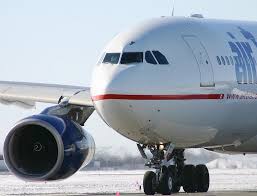
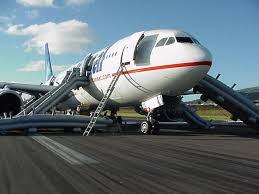
Flight 236 wasn’t the first plane to glide to safety, but it’s among the most remarkable.
The Gimli Glider (1983)
Air Canada Flight 143 ran out of fuel due to a metric conversion error. It glided to a landing at a former airbase in Gimli, Manitoba. The pilot, Bob Pearson, was also a glider enthusiast.
US Airways Flight 1549 (2009)
The “Miracle on the Hudson” saw both engines fail after bird strikes. Captain Sully landed in the Hudson River, saving all 155 aboard.
What Made Flight 236 Different?
- Longest glide distance: 75 miles vs. Gimli’s 17 miles
- Over water: No landing options until the Azores
- Modern fly-by-wire aircraft: Less forgiving than older planes
- Both engines failed gradually, not suddenly
The plane’s fate after flight 236
Repairs and Return to Service
The aircraft (registration C-GITS) was repaired and returned to service with Air Transat in 2002. It continued flying for another 16 years.
Final Retirement
The plane was finally retired in 2020 and stored. As of 2024, it remains in storage, a flying testament to human skill and engineering resilience.
Legacy
The aircraft is sometimes called the “Azores Glider“ in aviation circles, though it’s not as famous as the Gimli Glider or the Miracle on the Hudson plane.
Conclusion: When skill meets the impossible
Flight 236 shouldn’t have landed safely.
By all logic, an Airbus A330 with no engines over the Atlantic should have ended in tragedy. But skill, training, calm under pressure, and a little bit of glider pilot magic changed the outcome.
Captain Robert Piché and First Officer Dirk DeJager didn’t just follow procedures. They improvised, adapted, and overcame. They turned a catastrophic failure into a survivable emergency.
The 293 passengers who boarded that night in Toronto expected a routine flight. They got a story they’d tell for the rest of their lives.
And the aviation industry got a powerful reminder: technology is amazing, but human skill is irreplaceable.
Flight 236 proves that even when everything goes wrong, the right people in the cockpit can make everything go right.
Frequently Asked Questions (FAQs)
Q: Did Flight 236 really run out of fuel?
A: Yes. A fuel leak caused by improper maintenance led to complete fuel exhaustion over the Atlantic Ocean. Both engines failed.
Q: How far did Flight 236 glide?
A: The plane glided approximately 75 miles (120 km) from 34,500 feet to Lajes Air Base in the Azores—the longest glide by a commercial airliner in history.
Q: Did everyone survive Flight 236?
A: Yes. All 293 passengers and 13 crew members survived. 18 people sustained injuries during the hard landing and evacuation, but there were zero fatalities.
Q: What caused the fuel leak on Flight 236?
A: During engine replacement, mechanics used a non-standard hydraulic pump that caused the hydraulic and fuel lines to rub together, eventually wearing through the fuel line.
Q: Where is the Flight 236 plane now?
A: The aircraft (C-GITS) was repaired and flew for 16 more years. It was retired in 2020 and remains in storage as of 2024.
Q: Who was the pilot of Flight 236?
A: Captain Robert Piché, an experienced pilot with over 16,000 flight hours, including extensive glider flying experience that proved crucial to the successful landing.
Q: How long did Flight 236 glide without engines?
A: Approximately 17 minutes from the time the second engine failed until touchdown at Lajes Air Base.
Q: What happened to the pilots after Flight 236?
A: Captain Piché and First Officer DeJager were hailed as heroes. They received multiple awards and continued their flying careers. Piché retired in 2018.
Also Read:
- Every Breath You Take: The Terrifying Truth About Modern Lung Health
- Mobile Phone Addiction Is Destroying Gen Z! What Parents Can Do (Practical Solutions in 2026)
- Flight 236 Mystery: The Plane That Ran Out of Fuel and Glided to Safety
- What is Lunar Eclipse? Types, Causes, History, Significance, Mythology, and Facts
- The Posture-Productivity Link: How Sitting Wrong Kills Your Focus (And 3 Fixes That Work)