
You do everything right—or so you think. You’re in bed by 10 PM, your head hits the pillow, and you wake up eight hours later when the alarm goes off. Yet somehow, you feel like you’ve barely slept at all. That mid-morning slump hits hard, you’re reaching for coffee by 10 AM, and by afternoon, your eyelids feel like they’re carrying weights. If this sounds painfully familiar, you’re not alone.
Studies show that 27% of adults report daytime sleepiness despite getting 7.5 to 8.2 hours of sleep per night . Even more striking, a 2025 American Academy of Sleep Medicine survey found that 72% of U.S. adults say daytime sleepiness affects their daily activities at least sometimes, with 56% relying on caffeine and 46% needing naps to stay alert . The problem isn’t how long you’re sleeping—it’s how well you’re sleeping. Let’s uncover why your eight hours aren’t working and what you can actually do about it.
Why You Can Sleep 8 Hours and Still Feel Exhausted
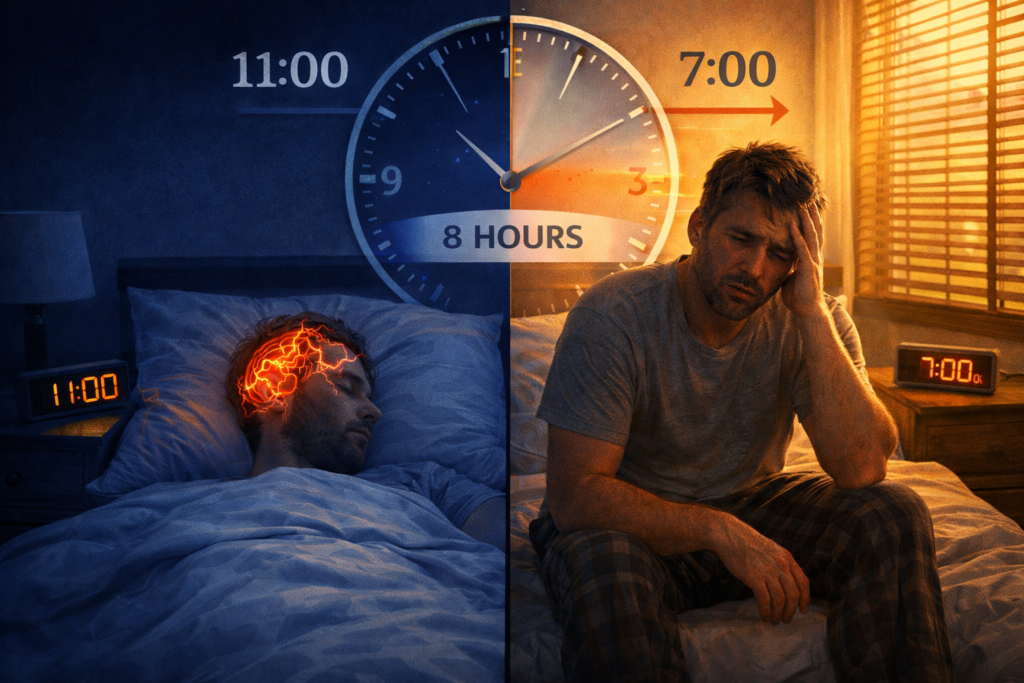
“Sleep quantity and sleep quality are not the same thing.” You can spend eight hours in bed and still miss out on the most restorative stages of sleep if your rest is fragmented or shallow . Sleep quality depends on several factors working together: consistent timing that aligns with your natural chronotype, minimal interruptions that keep your sleep consolidated, and sufficient time in each sleep stage—especially deep sleep and REM sleep . When any of these elements are off, you wake up feeling like you barely slept at all.
Think of sleep like baking a cake. Leaving it in the oven for the right amount of time matters, but if the temperature fluctuates wildly or you keep opening the door, the result won’t be edible. Similarly, spending eight hours in bed means little if your sleep is constantly disrupted—even by micro-awakenings you don’t remember.
Also Read:
How Sleep Affects Immunity: The Science of Immune System Health
Understanding Sleep Stages: Deep Sleep and REM Explained
To understand why you wake up tired, you need to understand what happens when you actually sleep well. After you fall asleep, your body moves through several sleep cycles, each lasting about 80 to 100 minutes. You typically go through four to six of these cycles per night .
Non-REM sleep has three stages:
- Stage 1: Light sleep. This is the transition between being awake and asleep. It’s easy to wake up from this stage .
- Stage 2: Deeper sleep. Your body temperature drops, and your heart rate slows. This stage plays a role in memory consolidation .
- Stage 3: Deepest sleep (slow-wave sleep). This is the most restorative stage. Tissue repair and growth occur here, and it’s tough to wake someone up during this phase. If you do wake up during deep sleep, you’ll experience “sleep inertia”—that horrible grogginess that can take up to an hour to shake off .
REM sleep (Rapid Eye Movement) is when your brain becomes highly active and you dream. During REM, your brain processes emotions and consolidates memories. Crucially, your arms and legs are temporarily paralyzed so you don’t act out your dreams .
If anything disrupts your progression through these stages—frequent awakenings, breathing pauses, or environmental disturbances—you rob yourself of the deep and REM sleep your body needs to feel restored .
The Shocking Statistics: How Common Is Daytime Sleepiness?
The numbers paint a clear picture: you are not alone in this struggle. A large sleep study conducted by the JAMA Network found that 27% of adults report daytime sleepiness—defined as feeling overly sleepy during the day at least five times per month—despite averaging 7.5 to 8.2 hours of sleep nightly .
More recent data from 2025 shows the problem may be worsening. A survey by the American Academy of Sleep Medicine revealed that 72% of U.S. adults say daytime sleepiness sometimes, often, or always affects their daily activities.
To cope, 56% rely on caffeine, and 46% need naps just to stay alert—even after getting what they believe is adequate sleep the night before .
These statistics underscore a critical truth: we’ve been obsessed with sleep duration when we should be focused on sleep quality. The through line in all this research is clear—duration and quality are not interchangeable .
Common Sleep Disorders That Steal Your Rest
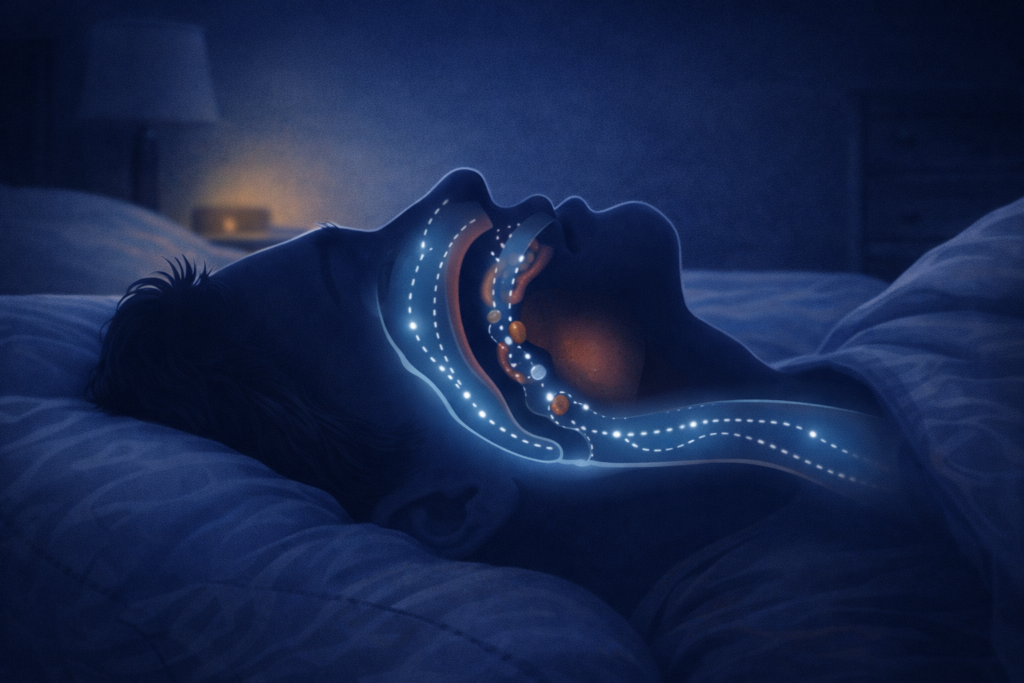
Sometimes, poor sleep quality stems from underlying medical conditions that require professional attention. If you’ve tried improving your habits and still wake up exhausted, one of these disorders could be the culprit.
Sleep apnea causes repeated breathing interruptions throughout the night. These pauses can last from seconds to minutes and may happen dozens or even hundreds of times per night. You might not remember waking up, but each interruption fragments your sleep and prevents you from reaching deep, restorative stages. Warning signs include loud, chronic snoring punctuated by gasping or choking, morning headaches, dry mouth upon waking, and excessive daytime sleepiness .
Restless Legs Syndrome (RLS) creates an irresistible urge to move your legs, often accompanied by crawling or tingling sensations. These symptoms worsen at rest and can make falling asleep nearly impossible. Many people with RLS also experience Periodic Limb Movement Disorder, where their legs jerk or kick repeatedly during sleep, causing micro-awakenings they never remember .
Hypersomnia refers to conditions that make you feel excessively sleepy during the day, even when you get a healthy amount of sleep at night. Unlike simple fatigue, hypersomnia involves an overwhelming, sometimes uncontrollable need to sleep .
If you suspect any of these conditions, consult a sleep specialist. A sleep study (polysomnography) can provide definitive answers .
The Thing Nobody Checks: Your Circadian Rhythm
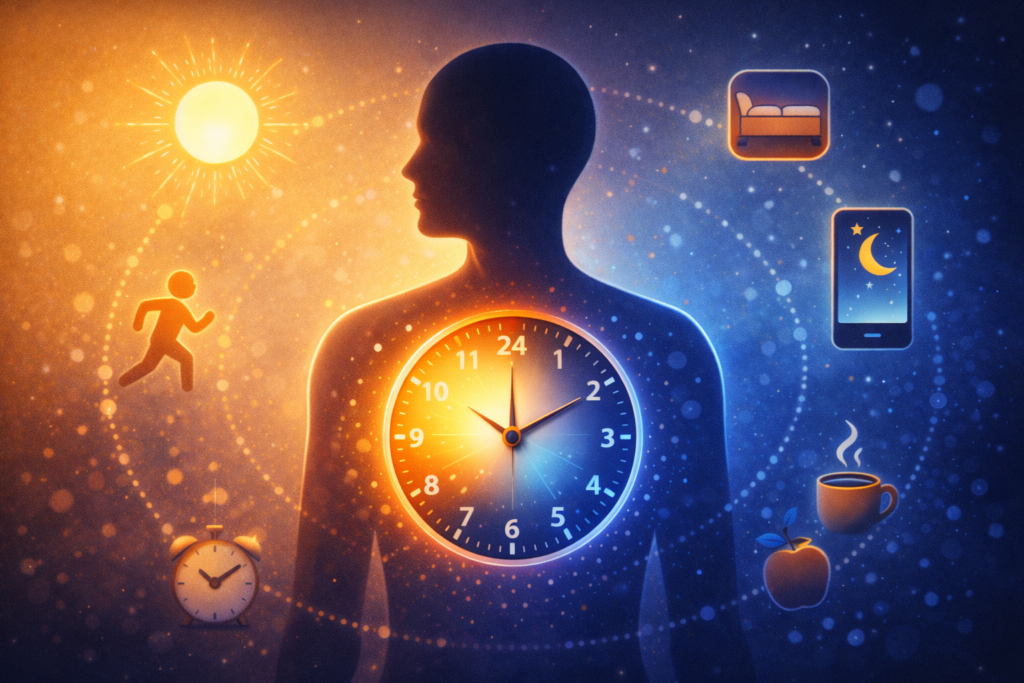
Here’s what most people miss when they can’t figure out why they’re still tired: circadian misalignment . Your body runs on an internal 24-hour clock that governs when you feel alert and when you feel sleepy. When this rhythm gets out of sync with your actual sleep schedule, eight hours in bed may not line up with your biology.
Social jet lag is a common form of circadian disruption. This happens when you keep different sleep schedules on workdays versus weekends. Staying up late Friday and Saturday, then sleeping in until noon, confuses your internal clock. By Sunday night, your body doesn’t know when it’s supposed to be tired .
Light exposure plays a massive role. Blue light from screens in the evening delays melatonin release, pushing your natural bedtime later. Meanwhile, inadequate daylight exposure in the morning fails to anchor your circadian rhythm, leaving it drifting .
Chronotype mismatch occurs when your natural tendency (being a “night owl” or “early bird”) conflicts with your required schedule. If you’re genetically programmed to sleep from 2 AM to 10 AM but your job demands a 7 AM wake-up, you’ll struggle with sleep deprivation regardless of how many hours you spend in bed .
The fix involves consistent wake times, morning light exposure, and aligning your schedule with your biology as much as possible .
How Your Diet and Exercise Habits Affect Sleep Quality
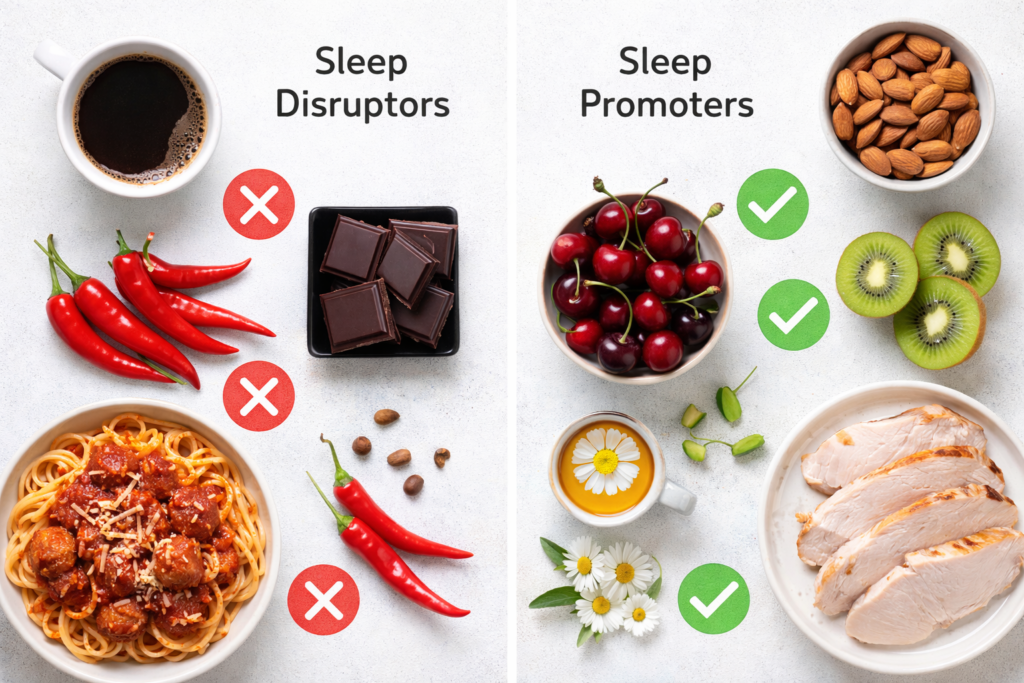
What you do during your waking hours directly impacts how well you sleep at night. The connection between diet, exercise, and sleep is bidirectional—poor sleep leads to worse food choices and less motivation to move, which in turn worsens sleep.
Nutrition matters enormously. Research in Sleep Medicine Reviews suggests that “healthier” diets—rich in fruits, vegetables, whole grains, legumes, olive oil, and seafood—are associated with better sleep quality compared to diets heavy in processed foods and added sugar . Specific nutrients appear particularly important. Studies show that inadequate intake of calcium, magnesium, vitamin A, vitamin C, vitamin D, vitamin E, and vitamin K is associated with sleeping fewer than seven hours per night .
Timing matters too. Avoid large, fatty, or spicy meals in the hours before bedtime. Your digestion slows when you sleep, and a heavy meal can cause discomfort, acid reflux, and blood sugar fluctuations that fragment your rest . Try to finish eating two to three hours before bed .
Exercise is one of the most powerful sleep interventions. Research reviews have found that physical activity is linked to better sleep quality and less time needed to fall asleep. For people with insomnia, regular exercise can be part of an effective treatment plan . Exercise releases endorphins and neurotransmitters that reduce stress and promote relaxation. Aim for 150 minutes of moderate-intensity activity weekly, but pay attention to timing—high-intensity workouts too close to bedtime may be too activating for some people .
Hormones and Sleep: Why Women Face Unique Challenges
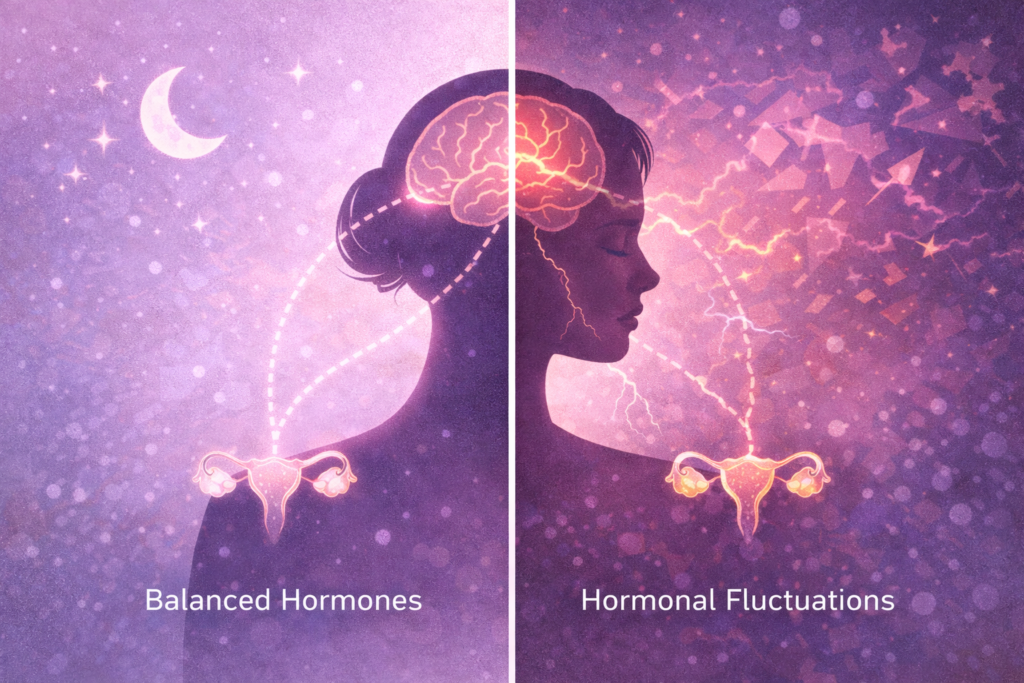
Hormonal fluctuations throughout a woman’s life can dramatically impact sleep quality. This is one reason why women frequently report feeling tired despite adequate sleep hours.
During the menstrual cycle, PMS and painful periods are associated with poor sleep, daytime sleepiness, difficulty falling or staying asleep, and shorter overall sleep duration .
Polycystic ovary syndrome (PCOS) increases the odds of sleep disturbances by 11 times compared to women without the condition .
Pregnancy brings its own challenges, with 34 to 46% of women reporting poor quality sleep .
Menopause is particularly disruptive. Between 40 and 60 percent of midlife women report sleep problems, often due to night sweats, hormonal shifts, and increased risk of sleep disorders like sleep apnea .
If hormonal changes affect your sleep, comprehensive screening and a whole-body treatment approach may be necessary. Lifestyle factors, nutrition, stress management, and sometimes supplementation can all play a role in restoring restful sleep.
Sleep Hygiene: Simple Practices for Better Rest
Sleep hygiene refers to the habits and practices that promote consistent, uninterrupted, and restorative sleep . These are the actionable steps you can take starting tonight.
Create a relaxing bedtime routine. In the hour before bed, engage in calming activities that signal to your brain that it’s time to wind down. This might include reading a physical book (not on a screen), taking a warm bath, gentle stretching, journaling, or practicing mindfulness meditation . The key is consistency—doing the same things each evening trains your brain to associate these activities with sleep .
Stick to a consistent sleep schedule. Go to bed and wake up at the same time every day—yes, even on weekends. This regulates your body’s internal clock and makes it easier to fall asleep and wake naturally . While consistency is ideal, the 2023 National Sleep Foundation consensus suggests that if you’ve had insufficient sleep during the week, it may be beneficial to get some catch-up sleep on weekends .
Optimize your sleep environment. Your bedroom should be cool, dark, and quiet . The ideal temperature for sleep is between 60°F and 67°F (15.5°C to 19.5°C) . Use blackout curtains to block outside light, and consider white noise machines or earplugs to mask disruptive sounds . Reserve your bed for sleep and intimacy only—no work, no screens, no eating .
Limit screen time before bed. Blue light from phones, tablets, and computers suppresses melatonin, the hormone that signals your body it’s time to sleep . But it’s not just the light—the content you consume matters too. Scrolling social media, checking news, or watching stimulating shows can increase alertness and stress right when you need to wind down . Put devices away at least 30 to 60 minutes before bedtime .
Watch your intake. Avoid caffeine for at least six hours before bed—its effects can linger much longer than most people realize . Limit alcohol, especially late at night; while alcohol may help you fall asleep initially, it fragments sleep and reduces REM sleep later in the night . Stay hydrated throughout the day, but reduce fluids close to bedtime to minimize nighttime bathroom trips .
When to See a Doctor: Red Flags You Shouldn’t Ignore
Sometimes, despite your best efforts, professional help is necessary. Consider consulting a sleep specialist or your primary care provider if:
- Morning fatigue persists for more than three weeks despite consistent sleep hygiene improvements .
- You experience excessive daytime sleepiness that interferes with daily activities, such as nodding off while driving or during meetings .
- Your partner reports loud, chronic snoring, gasping, or breathing pauses during your sleep.
- You have an irresistible urge to move your legs when trying to fall asleep .
- You experience severe, unexplained fatigue that affects your quality of life .
- You notice signs of other underlying conditions, such as thyroid issues, anemia, or depression .
Certain red flags require immediate medical attention. If you experience chest pain or pressure, sudden shortness of breath, confusion, slurred speech, sudden weakness, fainting spells, or severe dizziness—seek emergency care right away .
Your doctor may recommend a sleep diary, blood work to check for deficiencies (iron, vitamin D, B12, thyroid function), or a sleep study to diagnose disorders like sleep apnea .
Creating Your Personal Sleep Improvement Plan
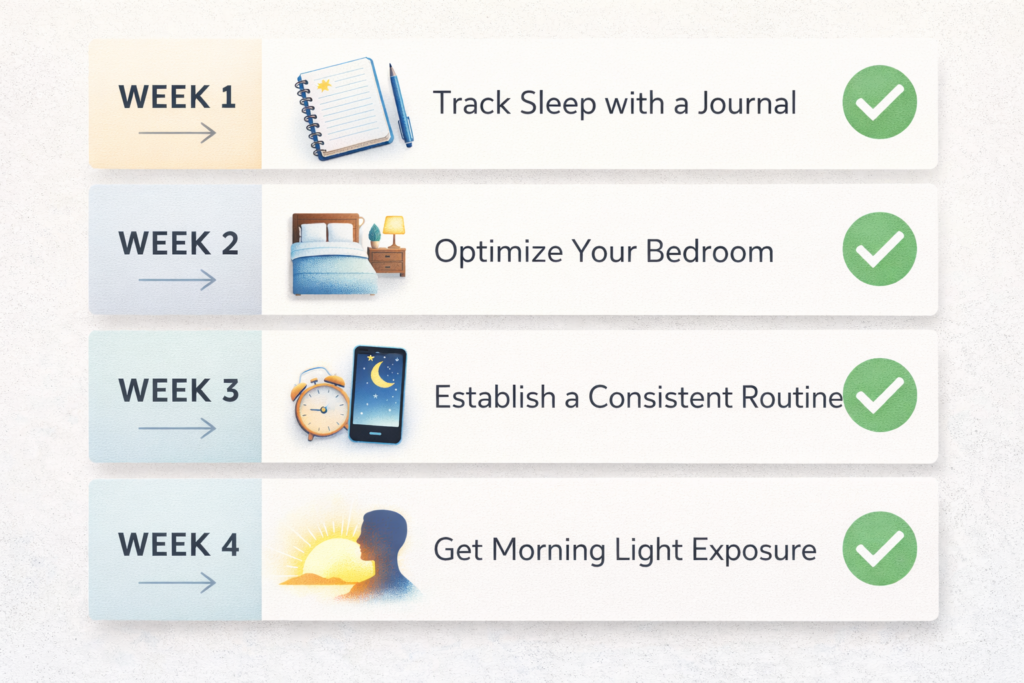
Improving your sleep doesn’t require a total lifestyle overhaul—just a few consistent habits . Here’s a step-by-step plan to get started:
Week 1: Track and assess. Keep a sleep diary for at least two weeks. Record your bedtime, wake time, how long it took to fall asleep, nighttime awakenings, caffeine and alcohol intake, exercise timing, and how you felt upon waking . Look for patterns. Do you sleep worse after late caffeine? After evening workouts? After wine with dinner?
Week 2: Implement environmental fixes. Set your thermostat to 65-67°F. Install blackout curtains if outside light is an issue. Move your phone charger across the room so you’re not tempted to scroll. If noise bothers you, try a white noise machine or fan .
Week 3: Establish routines. Choose a consistent bedtime and wake time—and stick to them, even on weekends. Create a 30-60 minute wind-down routine that works for you. This might include dimming lights, reading, gentle yoga, or listening to calm music .
Week 4: Fine-tune daytime habits. Get bright light exposure soon after waking—10-15 minutes outside, even on cloudy days, helps anchor your circadian rhythm . Time your exercise appropriately. Cut off caffeine by early afternoon. Finish meals 2-3 hours before bed .
If after four weeks you’re still waking up exhausted, it’s time to involve a healthcare provider. Sleep is not a luxury—it’s a biological necessity, and you deserve to wake up feeling truly refreshed.
The Bottom Line
Sleeping eight hours is not the same as sleeping well. The quality of your rest—the time spent in deep sleep and REM, the continuity of your sleep cycles, and the alignment with your body’s natural rhythms—determines how refreshed you feel in the morning. By understanding what’s robbing you of restorative sleep and implementing targeted solutions, you can transform your nights and reclaim your days. Your body is trying to tell you something when you wake up tired. It’s time to listen.





2 Comments on “Sleep Hygiene : Why You’re Tired Even After 8 Hours Sleep and How to Fix It”